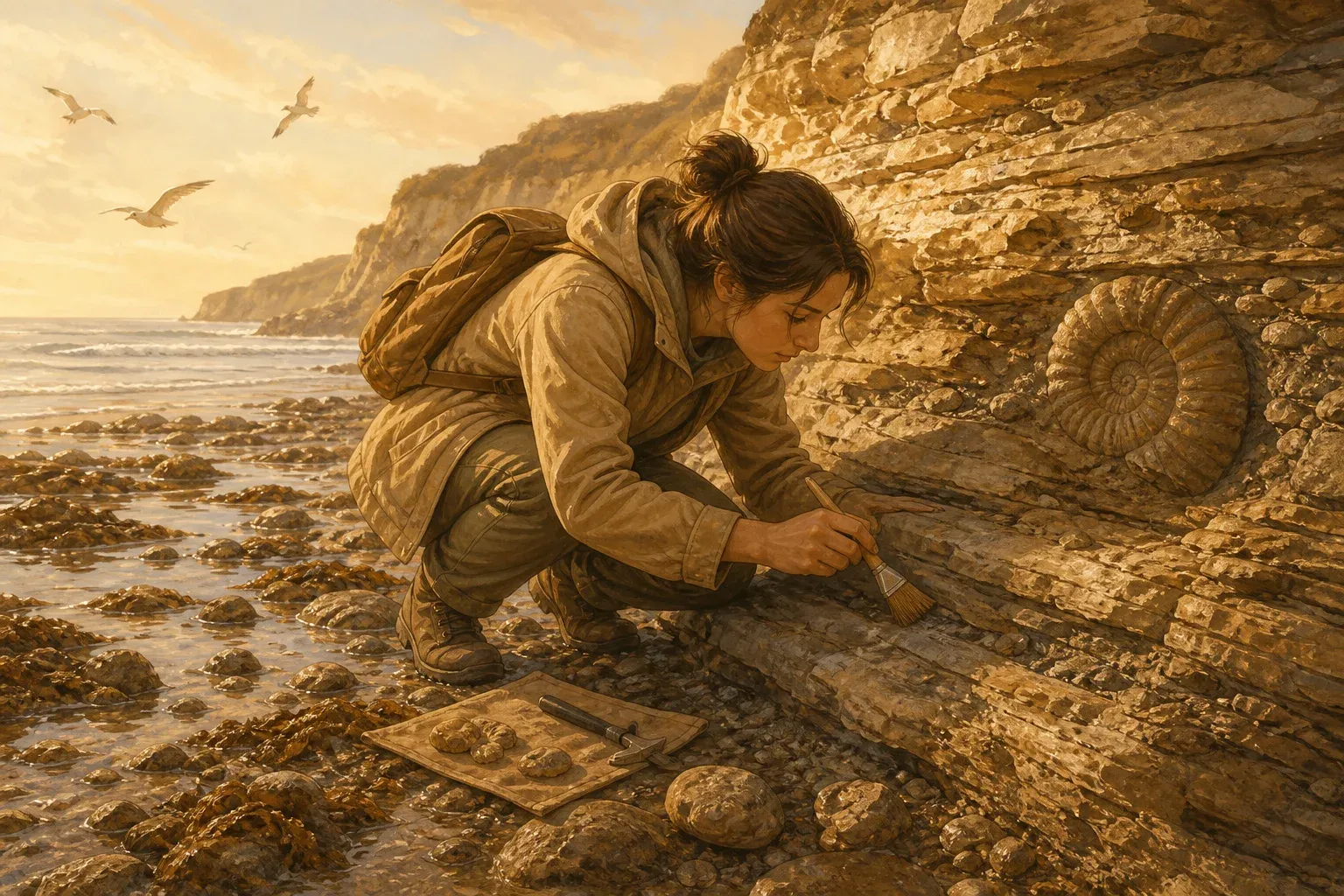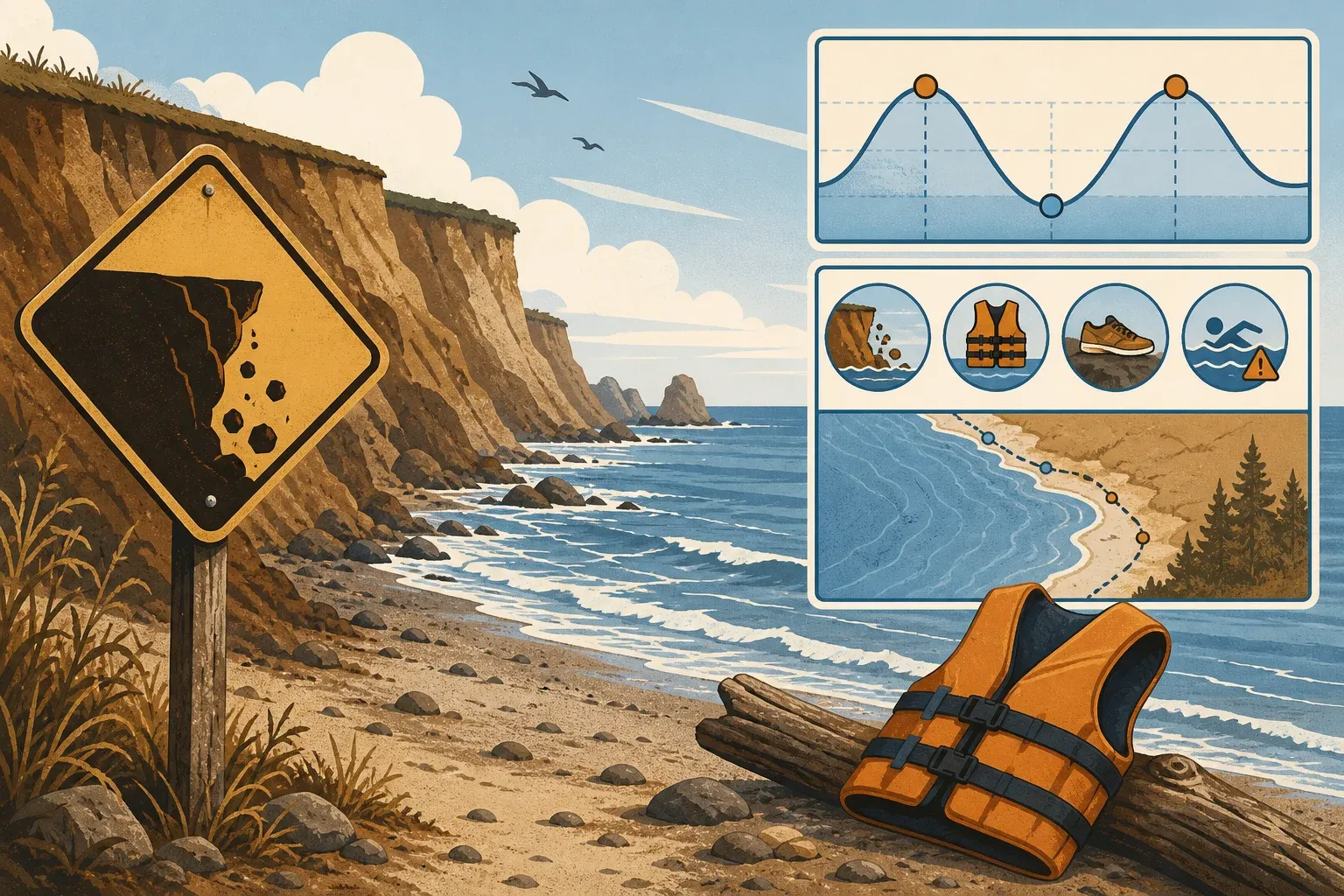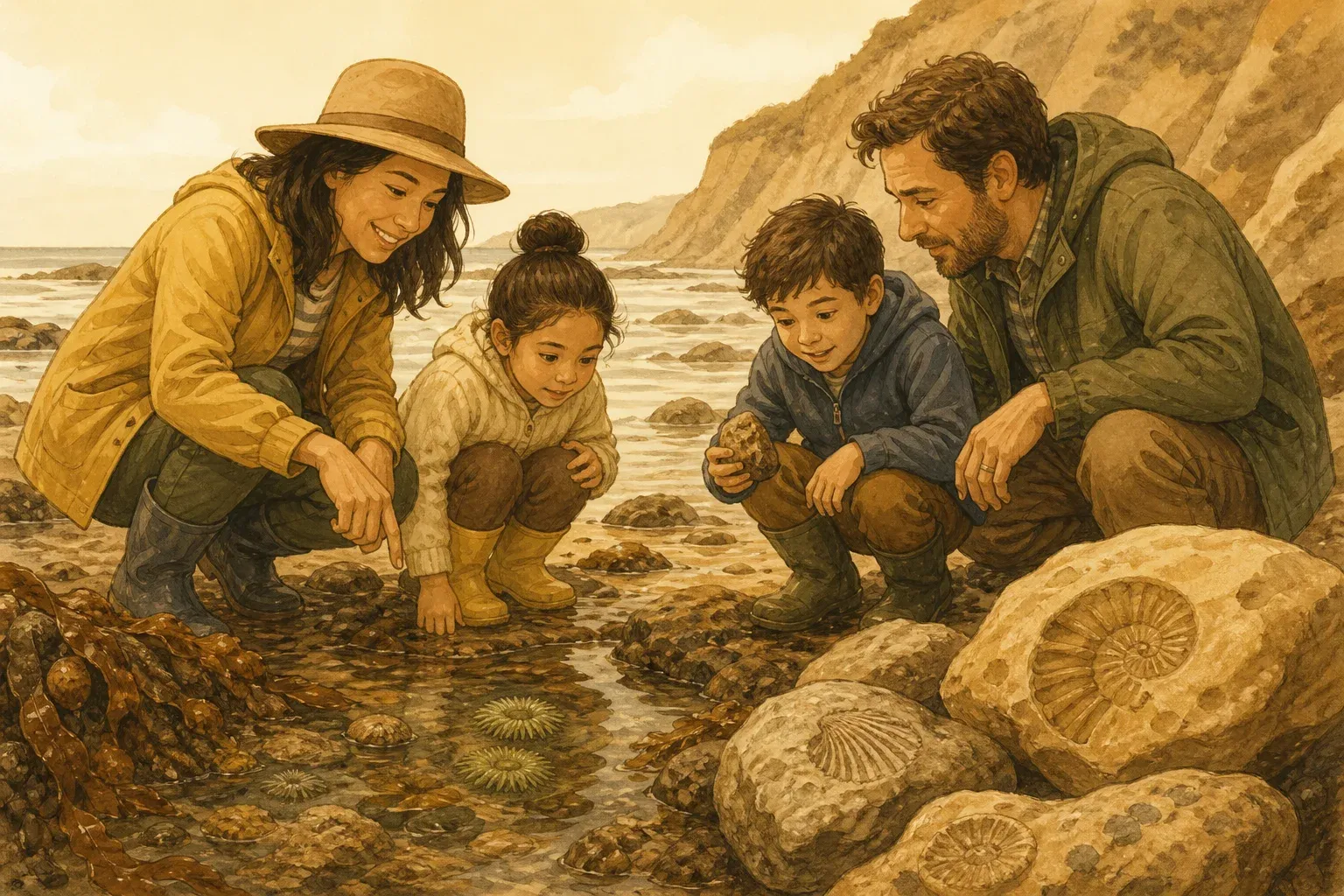
Fossil beaches occupy a sweet spot for family travel: they combine outdoor exercise, visible science, and the open-ended discovery that keeps children engaged longer than many structured attractions. A six-year-old may not remember the name of a geological period, but the experience of finding a spiral shell imprint in stone, watching a hermit crab navigate a tide pool, or comparing modern sand grains with fossil hash under a hand lens can linger for years. The challenge for parents and caregivers is not finding interest but channeling it safely and respectfully while matching activities to age, weather, tides, and site rules that vary widely across the United States. fluorapatitoid.com approaches family visits to fossil beaches as collaborative learning trips rather than collecting expeditions, emphasizing observation, questions, and preparation over the quantity of specimens brought home.
Why Fossil Beaches Work Well for Multigenerational Groups
Unlike specialized adventure activities with narrow age windows, shoreline geology offers tiered participation. Young children can scoop wet sand, sort shell fragments by shape, and sketch patterns in a notebook while older siblings photograph stratigraphic layers or read interpretive signs aloud. Grandparents often contribute patience and storytelling, connecting fossils to personal memories of earlier visits or to books read decades ago. The terrain is generally flat compared with mountain trails, though cliff-adjacent sections require tighter supervision and clear boundaries.
Educational value scales with attention span rather than requiring uniform depth. A toddler learns texture and color differences between rock types; a middle-school student can track how grain size changes along a beach profile; a teenager interested in biology may compare ancient mollusk morphology with living species in adjacent tide pools. Everyone shares the same landscape while engaging at different levels, which reduces the pressure to entertain separate age groups in parallel.
Matching Activities to Age and Development
Activities that delight one age group frustrate another. Planning a mix of short, concrete tasks with optional extensions keeps the day flexible when energy or weather shifts.
Preschool and Early Elementary (Ages 3–7)
Young children respond best to sensory, short-format exploration. Simple scavenger hunts work well when framed as looking rather than taking: find three colors of rock, spot something with a spiral shape, count bird footprints near the wrack line. Buckets and shovels suit sand play but should not be used to dig into cliff bases or dune vegetation. Waterproof boots or sturdy sandals with heel straps reduce slips on algae-covered rocks. Sessions of twenty to thirty minutes interspersed with snack breaks outperform long lectures about geological time, which abstract concepts this age group rarely retain.
Picture books brought from home or purchased at museum shops can anchor vocabulary before and after beach time. Matching illustrated species to real shells, within rules that prohibit removing live animals from tide pools, builds observational confidence. Drawing in a spiral-bound notebook with thick paper tolerates wind and damp fingers better than loose sheets.
Upper Elementary (Ages 8–11)
This age group often enjoys structured challenges with mild competition. Layer-thickness measuring with a tape measure, grain-size comparison using printed reference charts, or maintaining a tally of fossil types observed in a defined quadrat teaches method without requiring advanced terminology. Simple field journals with prompts such as "What looks oldest here?" and "What changed after the last storm?" encourage writing and reflection. Magnifying lenses priced for children survive drops better than precision optics and still reveal shell ornamentation and crystal faces in sand.
Middle School and Teenagers (Ages 12–17)
Older youth frequently engage when projects resemble genuine research tasks. GPS waypoint photos of the same cliff section, tide-height logging alongside exposed rock width, or preparing a short presentation for the car ride home connects fieldwork to skills used in school science fairs. Photography assignments with constraints, such as documenting three types of sedimentary structures without including people in frame, blend creativity with geology. Respectful social media sharing can motivate careful observation if ground rules about geotagging sensitive sites are discussed in advance.
Hands-On Activities That Do Not Require Collection
Many families assume that a successful fossil beach visit means filling a bucket. On most publicly accessible shorelines in the United States, collection is restricted or prohibited, and meaningful engagement does not depend on removal at all.
- Beach profiling: Mark a straight line from dunes to water with stakes or driftwood and note changes in sediment type at measured intervals. Discuss how energy from waves sorts particles by size.
- Fossil bingo: Create cards with drawings of common local fossils and cross off items when spotted in place on rock or loose on sand, without picking them up if rules forbid it.
- Tide pool etiquette walks: Observe living invertebrates quietly, replacing overturned rocks gently and avoiding handling. Compare living forms to fossil counterparts seen nearby.
- Storm story reconstruction: Look for fresh cliff falls, exposed roots, and relocated boulders after winter storms and hypothesize what forces moved them.
- Sound mapping: Close eyes for thirty seconds at different points along the shore and list heard sounds, connecting wave energy, wind, and bird activity to landscape features.
These activities reinforce that beaches are dynamic systems where fossils appear temporarily before erosion, burial, or collection removes them from view. Leaving specimens in context preserves the experience for the next visitor and often satisfies legal requirements as well.
Combining Museum Visits with Beach Time
Family itineraries benefit from splitting education across indoor and outdoor settings. Morning museum visits capitalize on cooler temperatures and fresher attention spans, while afternoon beach walks apply freshly learned vocabulary. Many visitor centers offer junior ranger programs, touch tables with replica fossils, and short films that contextualize field observations. Children who see an ammonite cast indoors often recognize fragment patterns outdoors that would otherwise register as generic stones.
Reverse sequencing works in hot climates: early beach exploration followed by air-conditioned museum review lets families match unknown finds to labeled specimens without pressure to collect. Staff and volunteers frequently enjoy answering specific questions from children who arrive with sketches rather than sacks of material.
When a child asks how old a fossil is, the most memorable answers connect numbers to familiar scales: lifetimes of trees, generations of families, or the age of a nearby city rather than millions of years alone.
Packing and Logistics for Family Shore Days
Successful family beach geology days depend as much on logistics as on curriculum. A baseline packing list adapted to your climate and tide window typically includes sun protection, layered clothing, more snacks and water than expected, first-aid supplies for cuts from sharp shell edges, and dry bags for electronics and journals. Closed-toe water shoes protect against hidden glass and barnacle cuts better than flip-flops on rocky intertidal zones.
Strollers suit firm sand paths but fail on cobble beaches and stair access points common at cliff-backed shores. Baby carriers with supportive frames work for short overlooks; extended low-tide walks may require tag-team carrying schedules. Portable shade structures help during midday low tides when ultraviolet exposure peaks on reflective wet sand.
Scheduling Around Energy and Tides
Align ambitious exploration with lowest tides and highest group energy, usually early in the day for families with young children. Build buffer time for unstructured play; forced marches along lengthy rocky shores exhaust patience before educational goals are met. Identify bathroom and rinse-off locations near parking areas for post-beach cleanup, reducing sand tracked into vehicles and lodging.
Teaching Stewardship Alongside Curiosity
Family visits shape long-term attitudes toward public lands and scientific resources. Explicit conversations about why certain fossils must stay in place, why cliff climbing is discouraged, and why live tide pool animals should not be pocketed model citizenship better than abstract rules delivered at the trailhead. Praise careful observation and accurate note-taking as achievements equivalent to finding a rare specimen.
Participating in organized beach cleanups or ranger-led walks demonstrates community responsibility without requiring geology expertise. Some parks offer volunteer days where families remove invasive plants or document trash accumulation rates, connecting environmental health to fossil preservation because litter and trampling accelerate damage to soft formations.
Accessibility and Inclusive Planning
Not every family member will navigate uneven cobble, steep stairs, or long distances equally. Researching wheelchair-accessible overlooks, firm-surface paths, and parks with tactile exhibits ensures broader participation. Sensory-sensitive children may prefer quieter beach segments away from booming surf; noise-canceling headphones and scheduled quiet breaks prevent overload. Visual schedules with illustrated steps for the day reduce anxiety for neurodivergent travelers unfamiliar with tidal environments.
When full beach access is impossible for part of the group, split activities with planned reunion points or rely on live video calls to share close-up views from a single explorer, a imperfect but inclusive workaround for physically separated family members.
Extending Learning After the Trip
Post-trip activities cement memories and science concepts. Sorting trip photos into a chronological digital album with child-written captions creates a narrative of cause and effect across the day. Simple experiments at home, such as settling mixed sediments in jars of water to mimic beach sorting, connect field observations to classroom physics. Library books on regional geology and paleontology selected together maintain momentum until the next visit.
Children who correspond with museum educators or park interpreters by email, when permitted, practice formal inquiry skills and sometimes receive identification help for photographed specimens still in the field. This correspondence reinforces ethical non-collection norms while validating curiosity.