Natural history is the study of organisms and their environments across time, encompassing geology, paleontology, ecology, and evolution as interconnected threads rather than separate disciplines. Along coastlines where fossil beaches and living tide pools coexist within meters of each other, this integration becomes tangible. You can place a fossil oyster from the Miocene beside a modern oyster from the same bay and ask what changed, what persisted, and why. On fluorapatitoid.com, we present coastal natural history as a framework for understanding scenic fossil beaches not merely as geological curiosities but as chapters in the ongoing story of life on Earth. This guide surveys deep time, major transitions in marine life, the relationship between ancient and modern ecosystems, and the environmental changes that continue to reshape coasts today.
Deep Time on the Shore
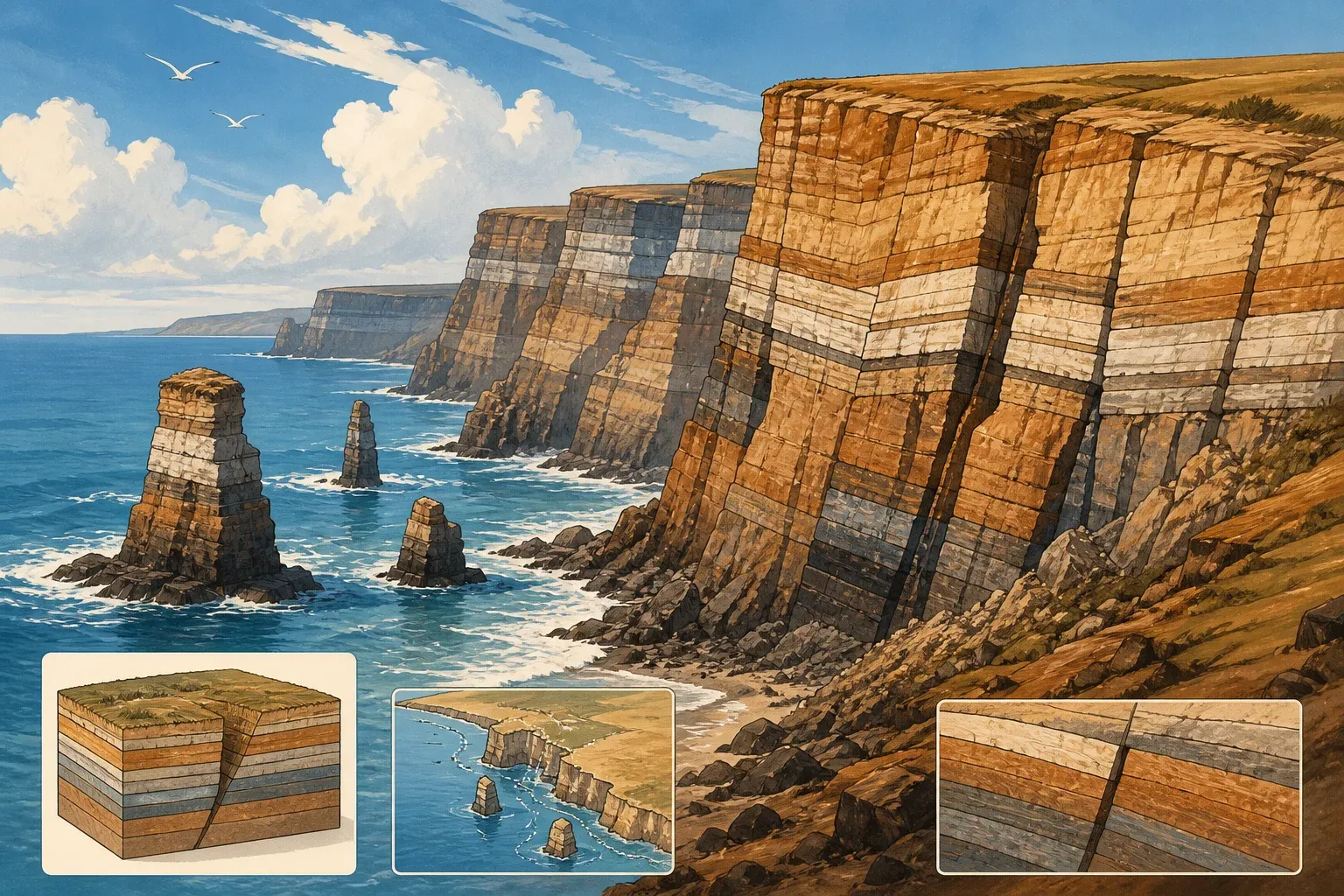
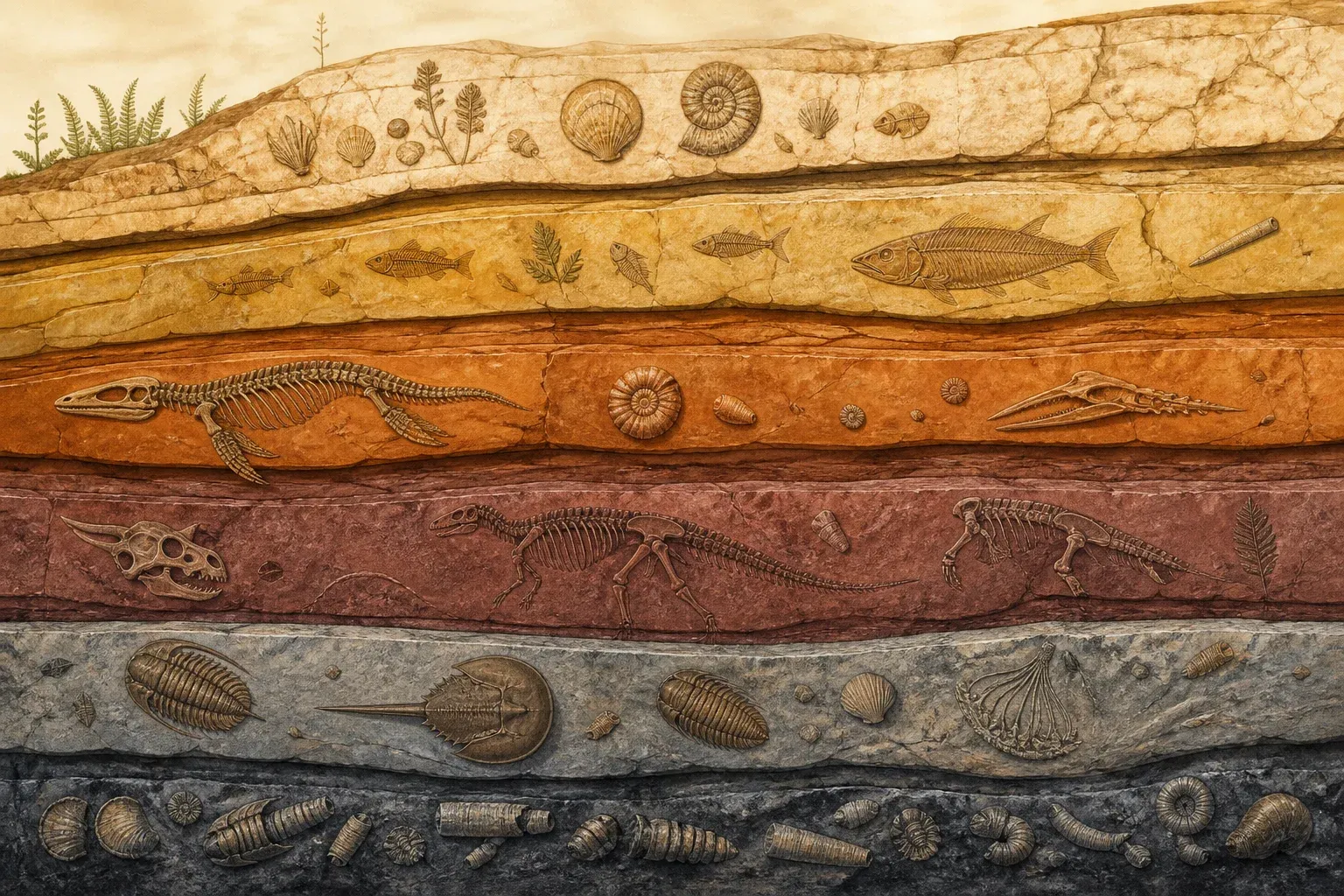
Geological time scales dwarf human experience. The Earth is approximately 4.5 billion years old; complex multicellular life becomes prominent in the fossil record roughly 600 million years ago; dinosaurs dominated terrestrial ecosystems for about 165 million years before their extinction 66 million years ago; anatomically modern humans appeared within the last few hundred thousand years. Coastal rock exposures compress slices of this history into walkable distances, with older formations exposed deeper or farther inland and younger beds nearer modern shorelines in many passive margin settings.
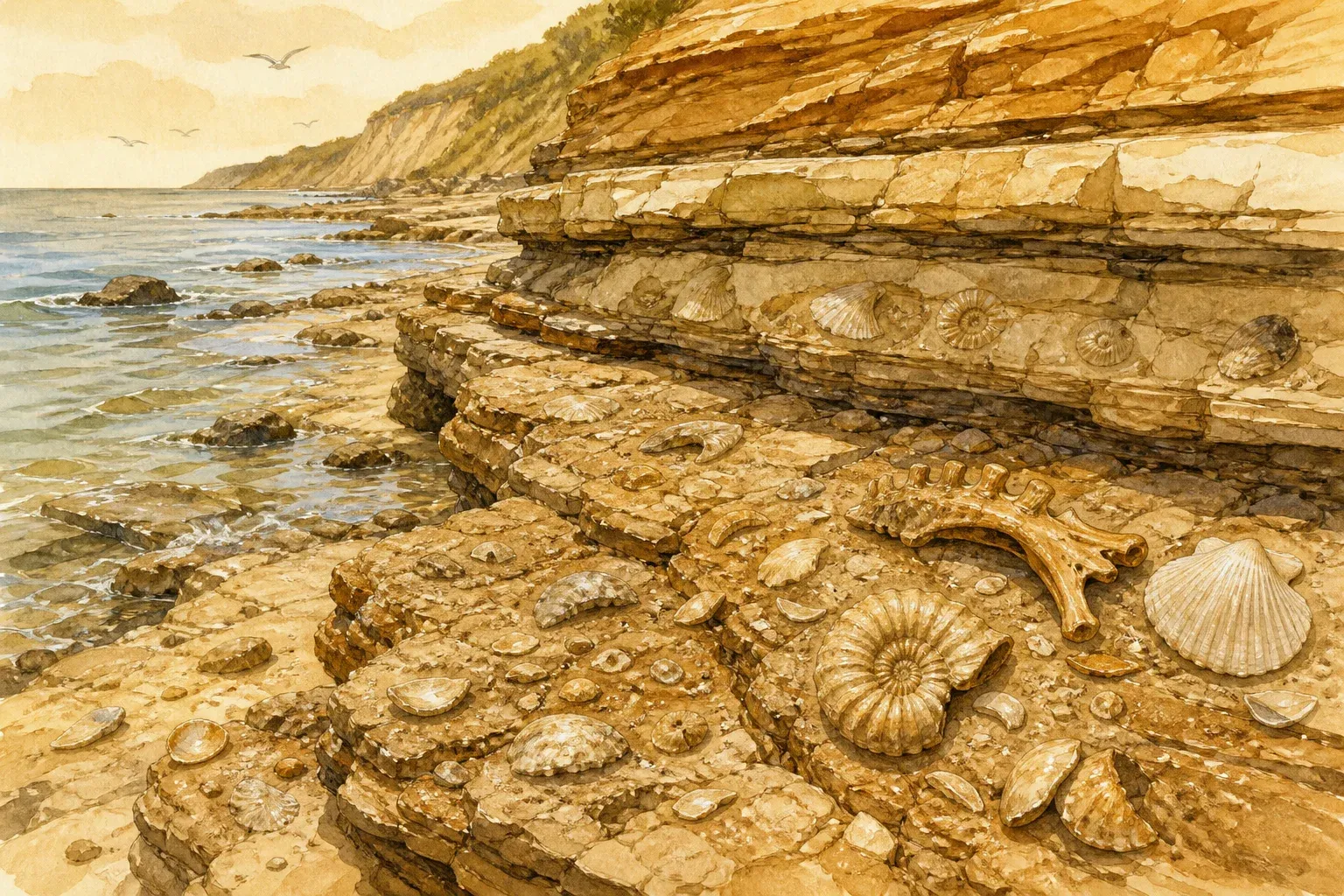
Fossil beaches preserved in cliff faces represent moments when sea level, climate, and biology aligned to deposit and bury shoreline sediments. Each bed captures a community adapted to specific salinity, temperature, wave energy, and substrate conditions. Reading natural history means reconstructing those parameters from physical and biological evidence and placing them in sequence.
From Simple Cells to Complex Coastlines
Earth's earliest coastlines, if they existed in recognizable form, hosted microbial life long before shells and skeletons left abundant fossils. Stromatolites, layered structures built by cyanobacteria, appear in Precambrian rocks and indicate shallow-water environments. The Cambrian explosion, beginning roughly 541 million years ago, marked a dramatic increase in diverse shelly fossils, many preserved in ancient nearshore and continental shelf deposits now exposed in mountain belts and eroded coasts.
Through the Paleozoic, marine invertebrate communities on coasts and continental shelves included trilobites, brachiopods, crinoids, and early corals. Vertebrates ventured onto land while fish diversified in coastal seas. Mesozoic coasts saw ammonites, belemnites, and marine reptiles; flowering plants eventually colonized back-barrier environments. Cenozoic fossil beaches familiar to many visitors contain mollusks, echinoids, and shark teeth resembling modern forms because the evolutionary lineages persist, though species and distributions have shifted with climate and geography.
Mass Extinctions and Coastal Recovery
Five major mass extinction events punctuate the fossil record, each reshaping marine and coastal ecosystems. The end-Cretaceous extinction eliminated ammonites and many reef-building groups, opening ecological space for mammals and modern coral-dominated reefs to expand in the Paleogene. Recovery after extinctions is not instantaneous; fossil beach sequences post-extinction often show low-diversity assemblages gradually replaced by richer communities over millions of years. Understanding these recoveries informs contemporary concern about biodiversity loss and ecosystem resilience along coasts stressed by warming, acidification, and habitat fragmentation.
Paleoecology: Reconstructing Ancient Coastal Environments
Paleoecology applies ecological concepts to fossil assemblages. Researchers treat fossil beaches and associated deposits as samples of ancient communities, inferring water depth, energy, substrate, and salinity from sedimentology combined with species presence and abundance.
- Energy indicators: Thick shell hash and coarse sand suggest high wave energy; fine mud and delicate shells indicate quiet water.
- Depth proxies: Gradation from intertidal facies to offshore muds maps transgression and regression of shorelines.
- Temperature estimates: Oxygen isotopes in shell carbonate correlate with paleotemperature when diagenetic alteration is minimal.
- Salinity signals: Mixed freshwater and marine faunas in estuarine fossil beds document river influence and seasonal variation.
- Predation and bioerosion: Drill holes in shells and grazing traces on hardgrounds reveal predator-prey dynamics comparable to modern tide pools.
Paleoecological reconstructions remain probabilistic. Fossil assemblages may be time-averaged, mixing generations over centuries, or transported from original habitats before burial. Scientists account for these biases using taphonomic analysis, the study of processes affecting organisms after death.
Natural history does not separate the dead from the living. A fossil beach is an ecosystem frozen in procedure: growth, death, burial, and discovery, waiting for someone to ask what the ocean looked like that day.
Evolutionary Stories Visible in Fossil Beaches
Coastal fossil deposits document evolutionary change at varying scales. At the grandest scale, major transitions such as the origin of jaws, limbs, and flowering plants appear in rock sequences worldwide. At finer scales, gradual shifts in shell morphology, size, and ornamentation within lineages illustrate adaptation and drift over millions of years.
Classic examples include coiling direction in gastropods responding to predation pressure, thickening of bivalve shells in high-energy environments, and changes in coral colony form tracking symbiotic algal partnerships. When fossil beaches span long stratigraphic intervals, stacked assemblages show turnover in dominant species as environments migrate with shifting shorelines.
Evolutionary education on coasts benefits from pairing fossil examples with living relatives in tide pools. Similar body plans highlight continuity; differences in species identity highlight speciation and extinction. This comparative approach grounds abstract evolutionary theory in observable morphology.
Modern Coastal Ecosystems as Analogues
Living coastal ecosystems function as analogues for interpreting fossil deposits. Rocky intertidal zones display zonation: barnacles and mussels lower on the shore, algae and higher invertebrates above, reflecting tolerance to desiccation and wave impact. Sandy beaches host burrowing clams and polychaetes rarely preserved whole but leaving trace fossils. Salt marshes accumulate organic-rich muds that may fossilize as carbonaceous shales.
Observing modern processes during coastal walks clarifies how ancient equivalents formed. Storm berms, washover fans, and tidal channel migration leave sedimentary structures recognizable in fossil beaches. Bioerosion by clams, sponges, and grazing snails modifies hard substrates today as in the past.
Human activity now dominates many coasts, introducing pollutants, artificial structures, and invasive species that alter ecosystems faster than most geological processes. Natural history includes this anthropogenic chapter honestly, distinguishing long-term geological change from recent human-driven shifts.
Climate Change and Coastal Natural History
Climate has oscillated throughout Earth history, driving sea-level change, temperature shifts, and biome migration. Fossil beaches at elevations far above modern tides mark interglacial highstands or tectonic uplift combined with past warm periods. Ice age lowstands exposed continental shelves, relocating shorelines far seaward of present positions and concentrating sediments and fossils in now-submerged landscapes.
Contemporary climate change adds greenhouse gases at rates uncommon in the geological record, challenging ecosystems adapted to prior conditions. Ocean warming, acidification, and sea-level rise affect reproduction, shell formation, and habitat area for coastal species. Fossil records of past rapid change, though never perfectly analogous to present forcing, provide benchmarks for how marine communities responded to stress.
- Sea-level rise: Submerges wetlands, erodes cliffs, and migrates beaches inland where development does not block retreat.
- Ocean acidification: Reduces carbonate availability, stressing organisms that build shells and skeletons.
- Heat waves: Exceed thermal tolerances in intertidal species adapted to narrow ranges.
- Storm intensification: Reshapes beaches and accelerates cliff erosion, exposing fresh fossils while destroying habitats.
Natural history museums and university research programs communicate these links through exhibits pairing fossil evidence with climate data. Public literacy supports informed policy without requiring specialized degrees.
Biodiversity Hotspots and Biogeography
Coastal biodiversity varies globally with latitude, upwelling, habitat complexity, and evolutionary history. Upwelling coasts, such as parts of California, Peru, and Namibia, support rich marine food webs reflected in dense fossil accumulations where preservation allows. Coral reef coasts preserve massive limestone formations when conditions favor rapid carbonate production and subsequent burial.
Biogeography tracks distribution of species across space and time. Fossil beaches document range shifts: tropical faunas found farther north during warm periods, arctic forms during cold intervals. Endemic species on isolated coasts leave distinctive fossil signatures useful for plate tectonic reconstructions when continents were closer or farther apart than today.
Integrating Geology and Biology in the Field
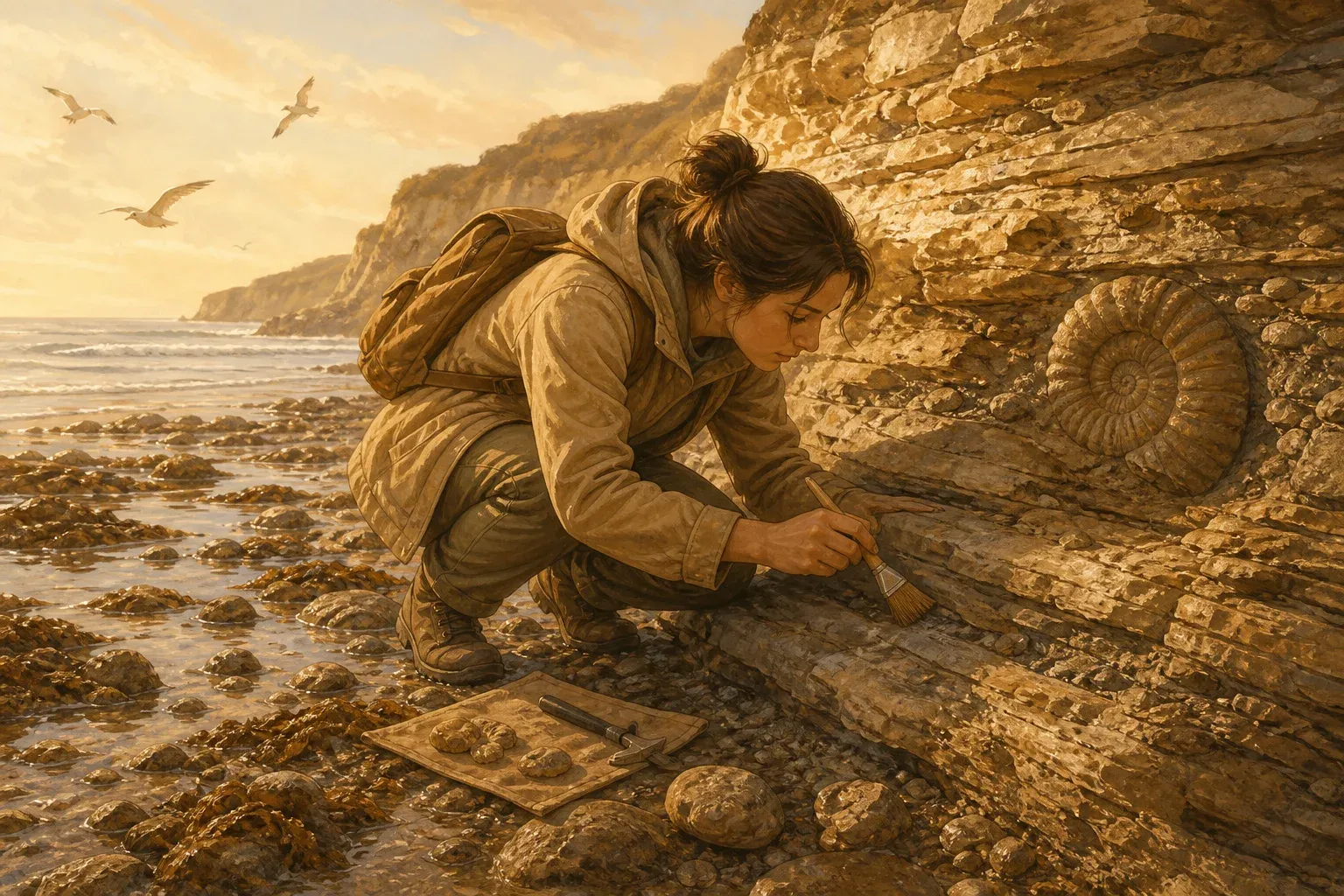
Natural history field practice integrates geological and biological observation. When examining a cliff exposure, note formation age, depositional environment, and fossil content simultaneously. When tide pooling, consider substrate geology beneath pools and how rock type influences water chemistry and attachment surfaces for organisms.
Field journals that combine sketches, species lists, rock descriptions, and questions for follow-up reading develop habits used by professional naturalists. Smartphone apps assist identification but should be verified against authoritative references; misidentifications propagate quickly online.
For geological context, see our guides to fossil beaches, geological sites, and fossil hunting. Each addresses complementary aspects of coastal exploration grounded in natural history.
Education, Museums, and Public Science
Museums remain central to natural history education, curating specimens inaccessible in the field and providing interpretive narratives vetted by specialists. Many coastal museums maintain collections from local fossil beaches and sponsor beach walks, lecture series, and school programs. University natural history collections, though primarily research-focused, sometimes offer open houses and volunteer opportunities.
Citizen science projects track modern biodiversity while building datasets useful for comparing present communities to fossil baselines. eBird, iNaturalist, and marine monitoring programs welcome observations from beach visitors who document species with date, location, and photographs.
Stewardship as Part of Natural History
Understanding natural history carries responsibility. Fossil and living coastal resources are finite and shared. Disturbance of nesting birds, trampling of rare plants, and unauthorized fossil collection degrade the record for future learners and researchers. Stewardship aligns with appreciation: the same sense of wonder that draws visitors to fossil beaches should motivate protective behavior.
Land managers, indigenous nations with coastal heritage, and local communities maintain knowledge systems predating modern science. Respectful engagement with indigenous perspectives on landscape and marine stewardship enriches natural history beyond Western academic frameworks alone, particularly on coasts with long human occupation histories.
Continuing Your Natural History Education
Suggested pathways for deeper study include introductory geology and biology textbooks, regional field guides from geological surveys, open courseware from universities, and membership in naturalist organizations offering guided trips. Reading primary scientific literature becomes accessible with glossaries and summary reviews in popular science journals.
Questions about educational content on fluorapatitoid.com may be directed to [email protected] or +1 (415) 673-2849. We welcome corrections supported by published references and update articles periodically to reflect consensus science, though editorial schedules mean brief lag relative to cutting-edge research.