Fossil hunting on beaches and coastal cliffs attracts amateur naturalists, families, students, and experienced collectors alike. The appeal is straightforward: shorelines erode constantly, occasionally revealing shells, bones, and trace fossils that connect the present sand underfoot to ecosystems millions of years old. On fluorapatitoid.com, we approach fossil hunting as an educational activity bounded by law, ethics, and safety. Collecting without understanding regulations can damage scientifically important sites, harm protected species records, and expose individuals to legal penalties. This guide explains how fossil hunting fits within responsible coastal exploration, what tools and techniques are appropriate, and how to balance personal interest with conservation of geoheritage for future research and public enjoyment.
Fossil Hunting vs. Professional Paleontology
Amateur fossil hunting and professional paleontological research overlap in field skills but differ in purpose, methodology, and accountability. Professional paleontologists document specimens with precise locality data, stratigraphic context, and catalog numbers before study and publication. Museum collections depend on this contextual information; a fossil without provenance loses much of its scientific value. Amateur collectors can support science by photographing in situ specimens, reporting finds to institutions, and donating well-documented material, but casual collecting for personal display without records rarely contributes to research.
Understanding this distinction helps set realistic expectations. Not every fossil found on a beach needs to be collected. Observation alone, supplemented by photography and notes, satisfies many educational goals and avoids legal and ethical complications.
Legal Framework: United States Overview
Fossil collection rules in the United States vary by land ownership, specimen type, and jurisdiction. General patterns exist, but specifics must be verified for each location before collecting.
Federal Land
On National Park Service, U.S. Fish and Wildlife Service, and most Bureau of Land Management lands, fossil collection is prohibited without a research permit. Casual collecting of invertebrate and plant fossils may be allowed on some BLM and Forest Service lands under surface disturbance limits, but vertebrate fossils are typically restricted. National seashores and marine monuments enforce strict protection; removal of any fossil material is generally unlawful.
State and Local Land
State parks often prohibit or tightly regulate collecting. Some states allow limited collection of common invertebrate fossils on designated beaches or with permits. Local ordinances may further restrict activity on municipal shores. Private land requires explicit landowner permission; trespassing to hunt fossils carries legal risk independent of fossil regulations.
International Visitors
Transporting fossils across borders may trigger customs and heritage protection laws in both the United States and the traveler home country. CITES regulations apply to certain fossil types in specific circumstances. When in doubt, do not collect material intended for export without consulting customs and heritage authorities.
- Always identify the land manager before collecting: park office, state geological survey, or county recorder.
- Ask about vertebrate vs. invertebrate rules; they often differ on the same property.
- Retain permits and written permission when collecting is allowed on private or permitted public land.
- Do not assume social media posts reflect current law; regulations change and popular spots may be misidentified.
Ethical Principles for Responsible Collectors
Even where law permits limited collecting, ethical practice minimizes harm to sites and science.
- Collect sparingly: Take only specimens you will study, curate, or use for legitimate education; common species need not fill every pocket.
- Preserve context: Record date, GPS coordinates, formation name if known, and whether the fossil was loose or in bedrock.
- Avoid destructive extraction: Hammering cliff faces damages exposures and creates hazards; focus on loose material where regulations allow.
- Report significant finds: Unusual vertebrate material or rare species should be reported to museums or geological surveys rather than secretly collected.
- Teach by example: Groups and families should model leave-no-trace behavior for younger participants.
Ethical fossil hunting aligns with geoheritage conservation, treating sites as shared resources rather than unlimited supply for private accumulation.
A fossil in the ground with its layer and neighbors intact can answer questions no isolated specimen ever will. The ethical collector asks not only whether taking is legal, but whether leaving is wiser.
Where Fossil Hunting Commonly Occurs on Coasts
Fossil-bearing coastal environments include several settings, each with different preservation, access, and regulatory profiles.
Loose Material on Beaches
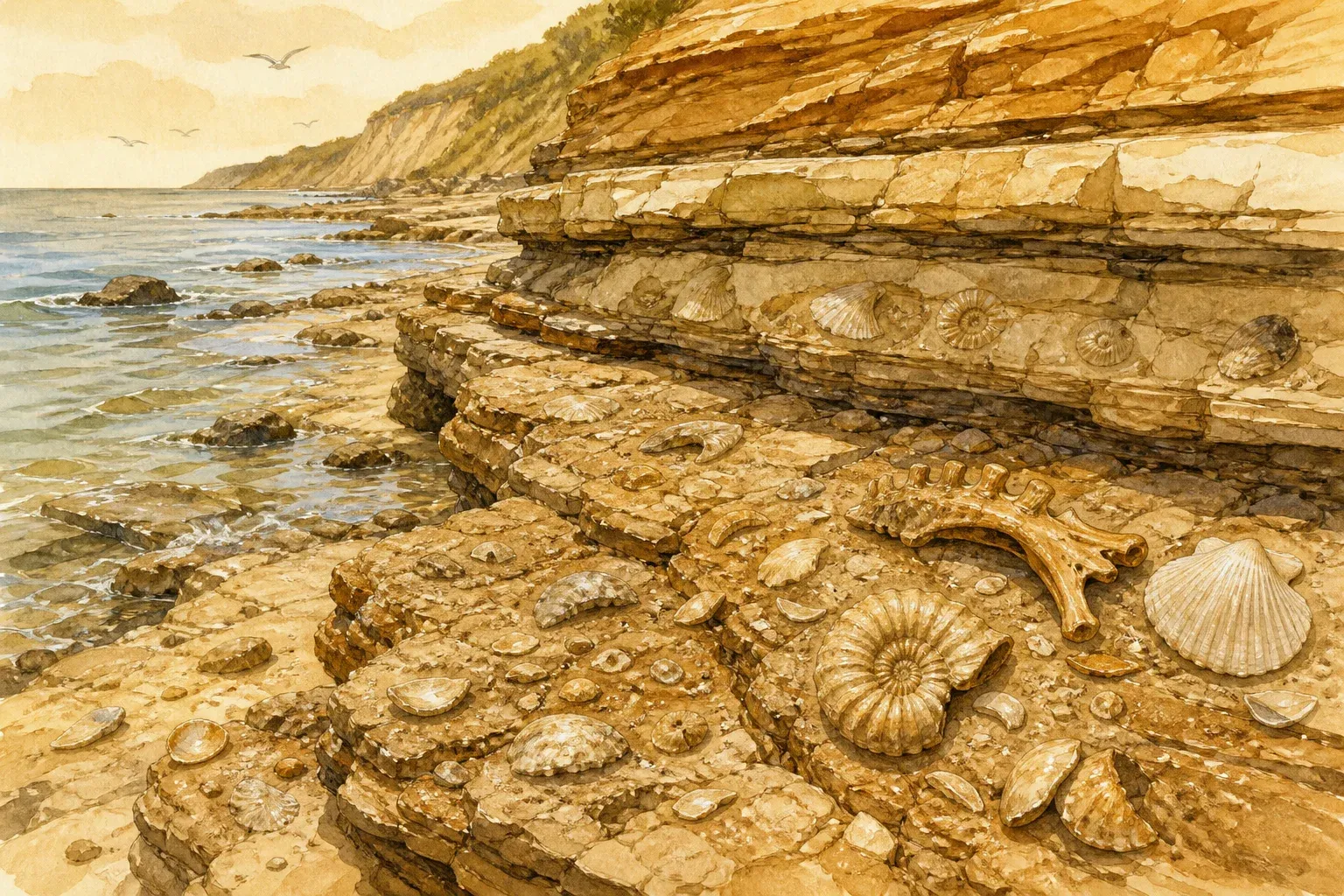
Storm waves and cliff falls deposit fossils among modern sand and gravel. These loose specimens are already removed from geological context, which reduces scientific loss from collection but does not automatically make collection legal on protected shores. Beach combing for fossils resembles shell collecting in terms of land rules and may be prohibited in parks regardless of specimen type.
Intertidal Platforms and Reefs
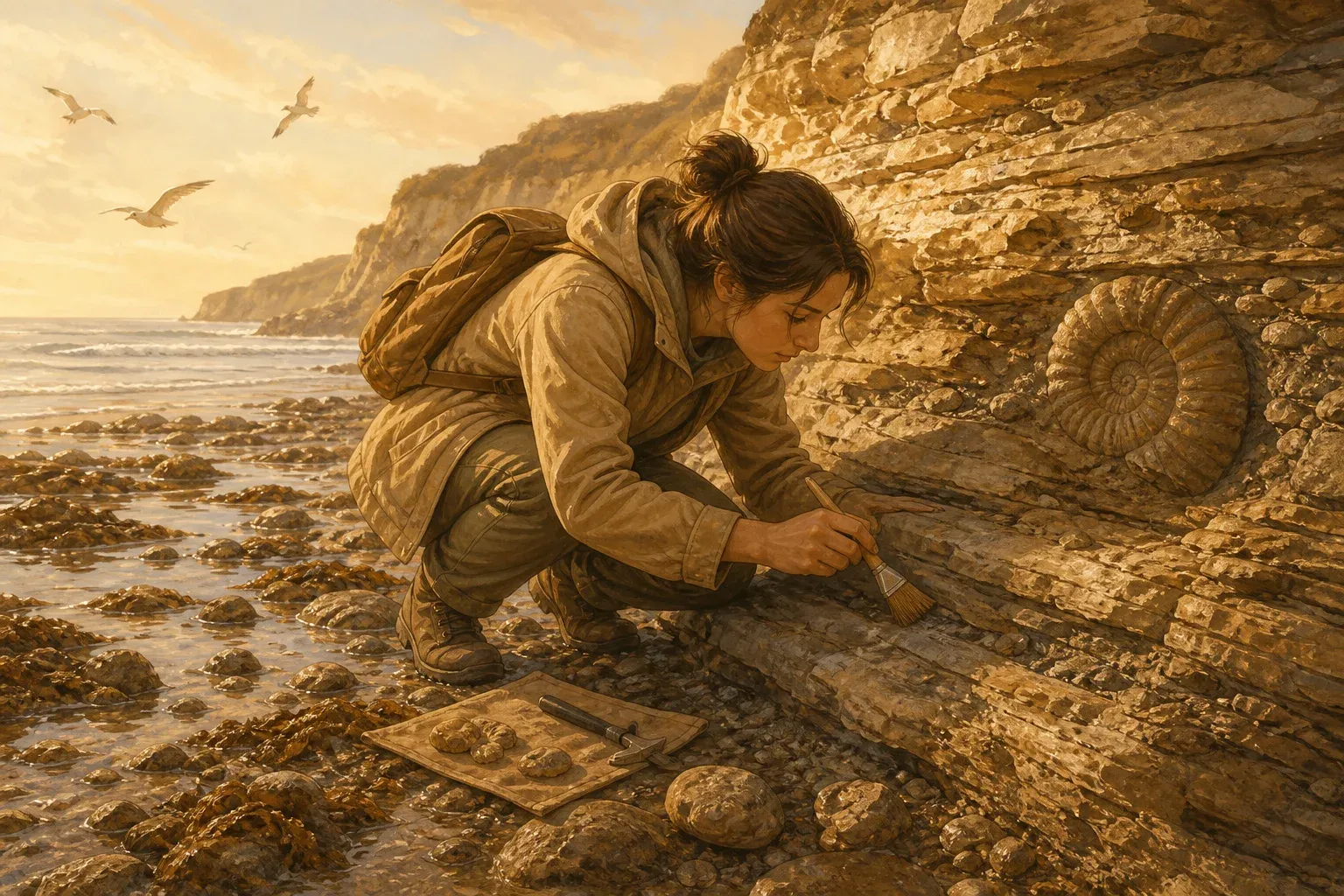
Exposed bedrock at low tide may contain fossils in situ. Removing embedded specimens requires tools and disturbs the exposure. Most protected sites prohibit extraction from bedrock entirely. Observation and photography are preferable.
Cliff Base Talus
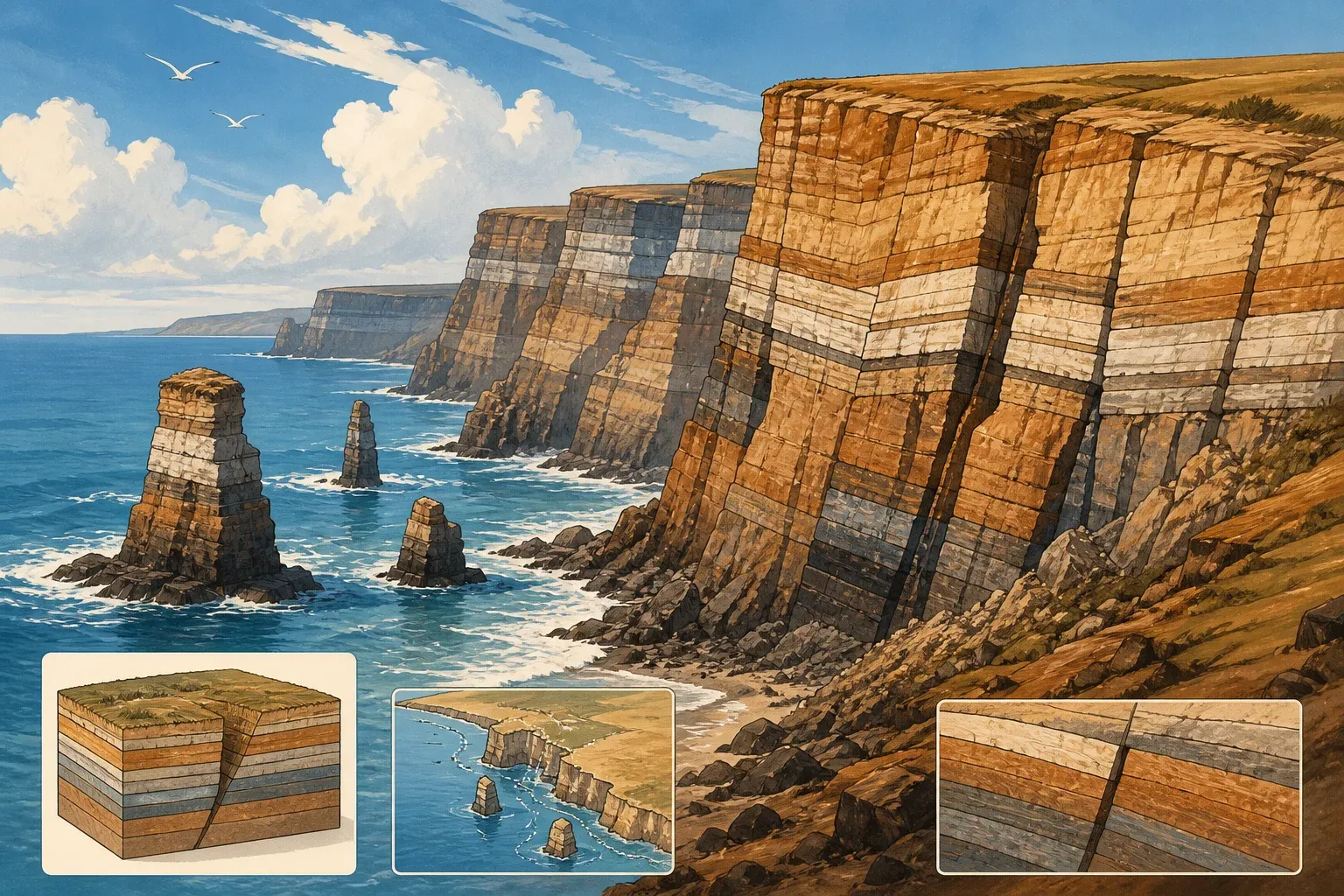
Fresh rockfall at cliff bases can expose new fossils without active hammering of standing cliffs. Talus collecting still carries safety risks from further falls and may violate site rules if any removal is banned. Hard hats and situational awareness are essential when working near cliffs.
River Mouths and Estuaries
Sediment delivered by rivers to coasts sometimes concentrates phosphatic fossils, including shark teeth, in lag deposits. These areas blur the line between coastal and fluvial collecting rules; land ownership may be complex in tidal zones.
Tools and Field Techniques
Appropriate equipment depends on whether you are observing, collecting loose material where permitted, or conducting permitted research.
- Hand lens (10x): Essential for examining surface texture, microfossils, and preservation quality.
- Field notebook and waterproof pen: Record locality, tide, weather, and specimen descriptions.
- Camera or smartphone: Photograph specimens in place before handling; include scale references.
- Soft brush: Remove loose sand without scratching fossils; never brush fragile specimens aggressively.
- Bags and wrapping: Individual paper bags or foam padding prevent specimens from abrading each other.
- GPS or mapping app: Accurate coordinates support ethical documentation and permit compliance.
Rock hammers, chisels, and power tools are inappropriate for casual collecting on most public coasts and dangerous near unstable cliffs. Professional excavations use these tools under permits, environmental review, and safety protocols beyond amateur scope.
Identifying Common Coastal Fossils
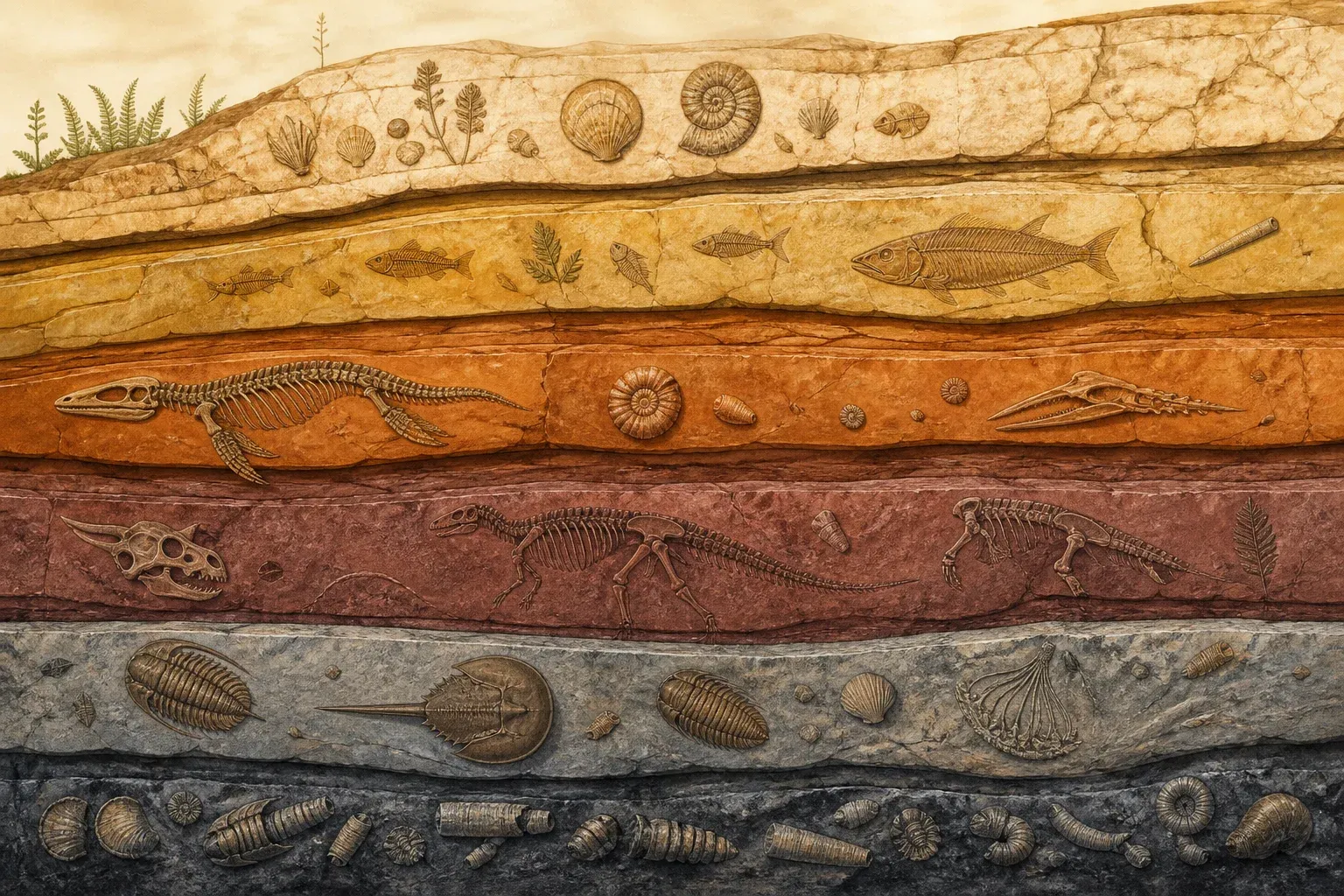
Identification begins with distinguishing fossil from modern shell, rock texture, and human-made debris. Modern shells on beaches often retain color, glossy exteriors, and thin, unmineralized structure. Fossil shells typically show mineral replacement, uniform coloration within a rock matrix, or greater density and weight.
Common coastal fossil categories include:
- Bivalves and gastropods: Clams and snails dominate many Cenozoic beach deposits; hinge structures and growth lines aid genus-level identification with field guides.
- Shark teeth: Triangular, serrated, or broad forms in phosphate-rich gravels; verify against modern fish jaw fragments and industrial slag, which are sometimes mistaken for fossils.
- Corals and bryozoans: Colonial textures in limestone and reef facies; distinguish from modern coral fragments restricted by wildlife trade laws when living species are involved.
- Trace fossils: Burrows, trails, and root casts indicate behavior and sediment consistency rather than organism body form.
- Bone fragments: Porcellaneous texture and internal structure differ from rock; vertebrate material often triggers stricter legal protection.
Regional field guides, university extension publications, and museum identification days provide authoritative references beyond general websites. Scientific names evolve; consult recent literature when precision matters.
Cleaning, Storage, and Curation at Home
Specimens collected legally still require care to prevent deterioration. Rinse loose sand with fresh water; avoid harsh acids unless you understand chemical effects on mineral composition. Air-dry thoroughly before storage in paper bags or compartmented boxes. Label each specimen with locality data permanently associated with the fossil, not on removable sticky notes alone.
Direct sunlight, attic heat, and garage humidity cycles damage fossils over time. Stable indoor conditions preserve collections for decades. Consider donating duplicates to schools or museums where they support education beyond private display.
Safety on Fossil Hunting Trips
Fossil hunting concentrates activity at the base of eroding cliffs and on tidal rock, two of the most hazardous coastal environments. Rockfall kills and injures collectors worldwide each year. Never hammer under overhangs, and limit time spent directly beneath steep cliffs. Monitor tides and swell; stranded collectors require expensive rescue operations and face personal danger.
Wear gloves when handling sharp rock and shells, carry first aid supplies, and tell someone your planned route and return time. Solo trips on remote shores demand extra conservatism in tide margins and weather assessment.
Alternatives to Collecting
Many enthusiasts find lasting satisfaction without removing specimens. Photography, sketching, geocaching-style educational hunts that leave fossils in place, and volunteering at museum preparation labs offer hands-on engagement. Digital databases and augmented reality apps increasingly supplement field visits with layer maps and species overlays accessible on phones at overlook points.
Supporting public institutions through membership, donations, or documented find reports strengthens paleontology more reliably than unstructured private accumulation of common species.
Connecting With Local Expertise
Geological societies, university geology departments, and natural history museums often host field trips open to the public. These outings provide legal localities, expert identification, and safety supervision. Park ranger programs at fossil-rich units interpret exposures without encouraging illegal collection. Contact information for general educational inquiries appears in our site footer: +1 (415) 673-2849 and [email protected].
For related reading, see our guides to fossil beaches, geological sites, and natural history, which provide geological and ecological context for field discoveries.