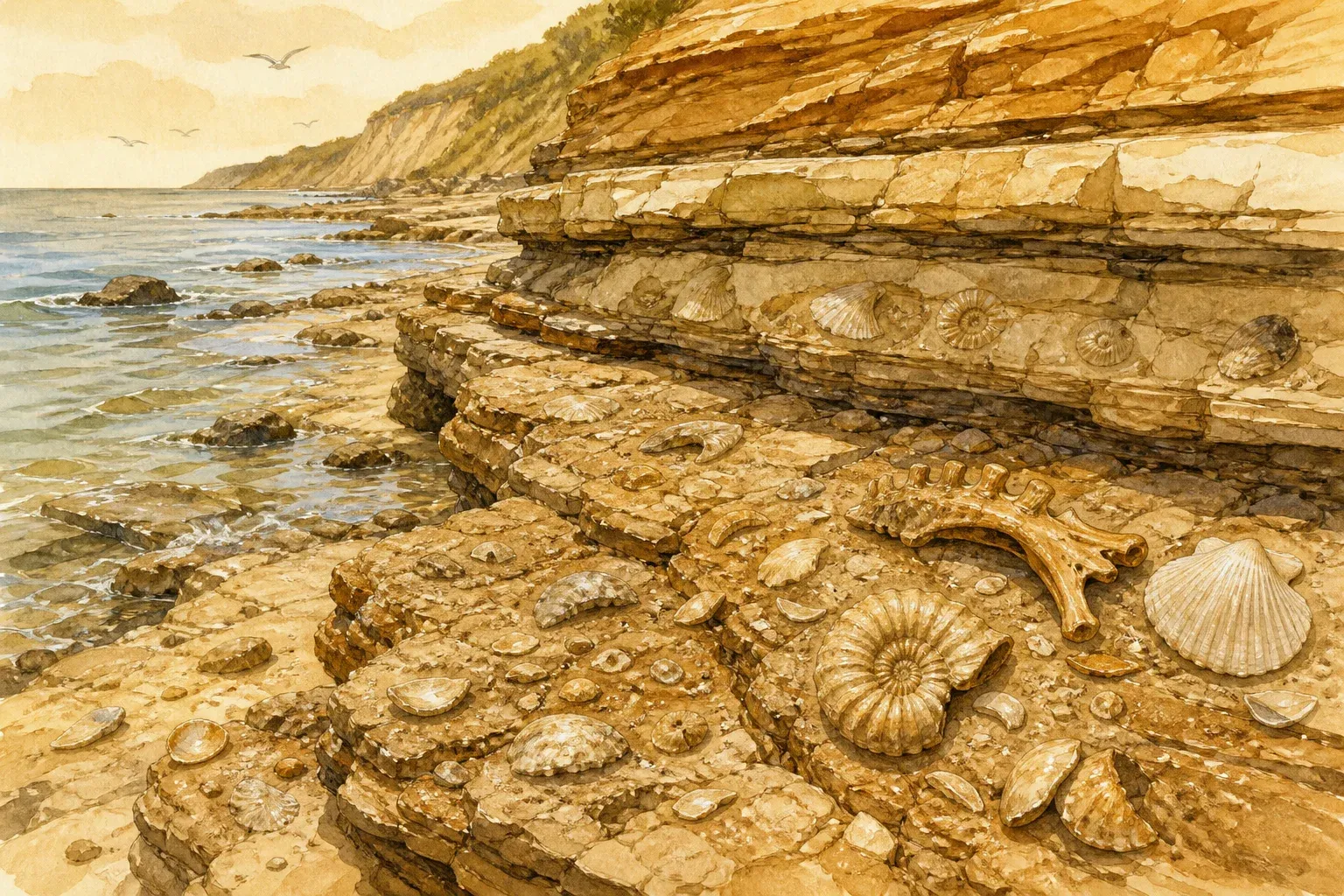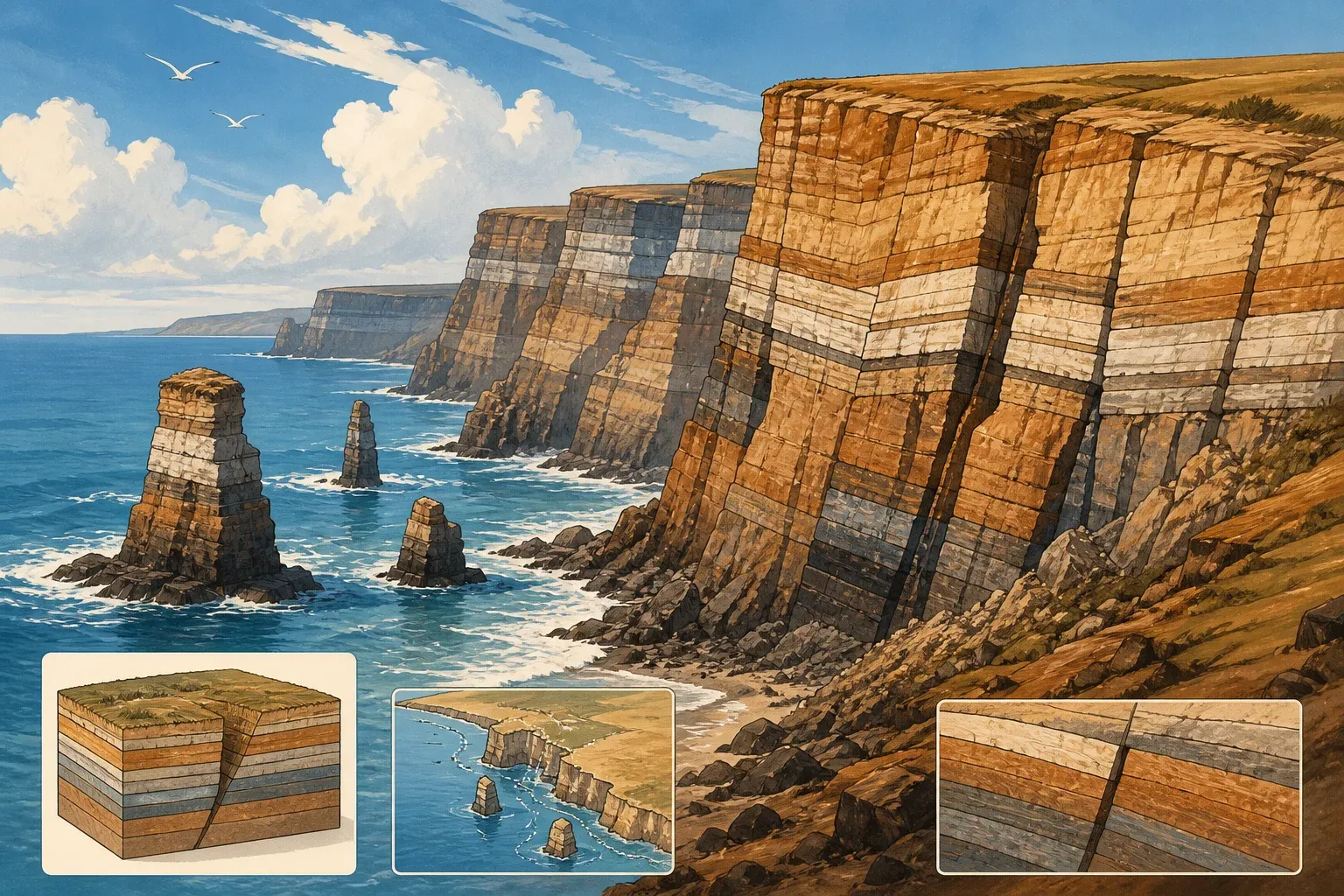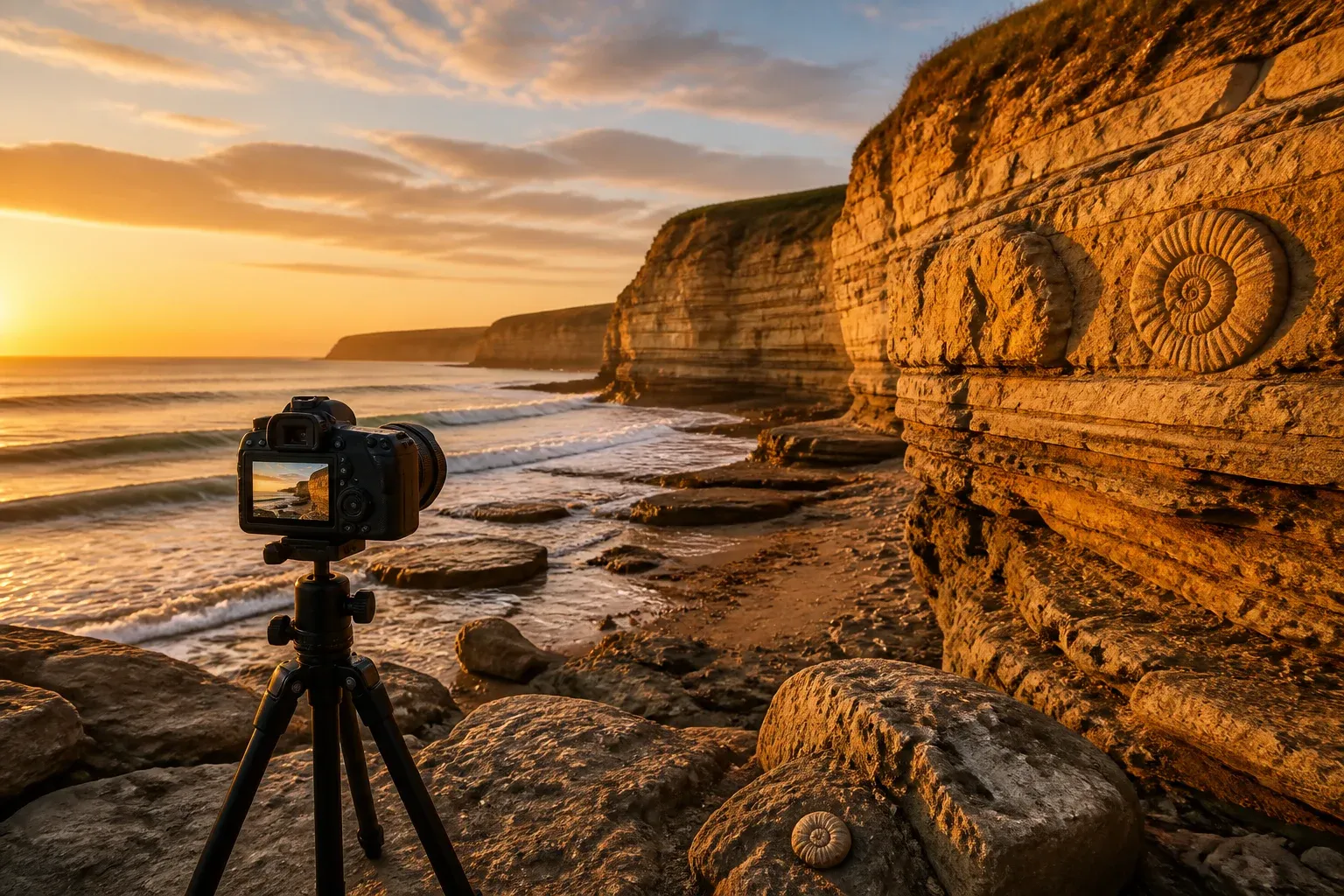
Fossil beaches offer photographers a rare combination of subject matter: dramatic landforms, fine geological detail, living coastal ecosystems, and evidence of deep time visible at human scale. A cliff banded with contrasting sediment layers can read as abstract texture from ten meters away and as a precise stratigraphic record from ten centimeters. Tide pools mirror the sky while preserving shells and imprints that have not seen sunlight in millions of years. Yet these same environments impose constraints that differ sharply from inland landscape work. Salt spray, shifting tides, unstable footing, and fragile formations demand both technical preparation and a clear sense of what not to disturb. This guide on fluorapatitoid.com covers the practical skills for photographing fossil beaches across the United States, from planning around tides and weather to composing images that communicate geology without treating the shoreline as a prop.
Why Coastal Geology Photography Is Its Own Discipline
Beach and cliff photography is often grouped with general seascape work, but fossil-rich coastlines add layers of complexity. Subjects may span six orders of magnitude in size, from panorama-scale cliff profiles to millimeter-wide foraminifera tests in freshly fallen mudstone. Light changes minute by minute as clouds move and waves reflect upward fill. Access windows tied to tides mean that the best angle on a formation may appear only once or twice per month. Unlike a mountain vista that remains broadly consistent through a season, an actively eroding fossil beach can look materially different after a single storm, which makes repeat visits valuable but also means that reference photos age quickly as landmarks crumble or new layers emerge.
Photographers who treat these sites purely as aesthetic backdrops sometimes miss opportunities to produce images with documentary value. Conversely, those focused only on specimen close-ups may ignore contextual shots that explain where a fossil sits within a formation. The most useful coastal geology portfolios usually include both scales: wide establishing frames that show landform relationships and detailed images that reveal texture, grain, and preservation quality.
Planning Around Tides, Weather, and Season
Tide tables are as important as lens choice for most fossil beach shoots. Low tides expose intertidal platforms, tide pools, and cliff bases that remain underwater or unsafe to approach at high tide. Extreme low tides following new or full moons often reveal the broadest workable area, but they also attract larger crowds, which affects both composition and the patience required for tripod setups. Checking NOAA or equivalent regional tide predictions for your specific beach, not just the nearest harbor, prevents costly miscalculations because local geography can shift timing by tens of minutes.
Weather interacts with tides in ways that matter for photography. Overcast skies reduce harsh contrast on pale limestone and bleached shell hash, making stratigraphic bands easier to render without blown highlights. Brief clearing after rain can saturate rock colors and darken wet sand enough to separate fossils from background material. Wind direction determines spray exposure for equipment and whether long exposures of surf will render as smooth mist or chaotic blur. Seasonal sun angles change shadow depth on cliff faces: winter light at higher latitudes may skim horizontally across bedding planes, emphasizing texture that midday summer sun flattens into uniform brightness.
Building a Field Schedule
A workable single-day plan often sequences photography types by light quality and tide height. Many photographers shoot cliff panoramas and contextual wide shots during the hour after sunrise or before sunset, when sidelight reveals relief. Macro and detail work on fossils in shade or under diffused cloud cover reduces specular glare on wet surfaces. If low tide falls near midday, prioritize intertidal access first, then retreat to bluff-top viewpoints as water rises. Always identify exit routes before descending to cliff bases, since incoming tides can cut off return paths on sloping beaches faster than intuition suggests.
Light, Exposure, and Color Management
Coastal scenes routinely exceed the dynamic range of camera sensors. Bright sky, dark wet rock, and reflective water in a single frame push highlight and shadow recovery to their limits. Exposing for the brightest element, typically sky or foam, and recovering shadows in raw processing preserves more usable data than the reverse, though exact strategy depends on camera model and personal tolerance for noise.
Polarizing filters remain useful on fossil beaches for reducing glare on wet stone and water surfaces, which helps reveal internal layering and fossil contrast. Graduated neutral density filters or bracketed exposures for manual blending address sky-to-foreground brightness differences in wide shots. Auto white balance often shifts unpredictably between sun, shade, and reflected blue from water; setting a fixed kelvin temperature or using a gray card reference in mixed-light conditions produces more consistent series when assembling multi-image panels or time-lapse sequences.
Close-Up and Macro Considerations
Fossil detail photography benefits from diffused light, either from cloud cover or a small portable diffuser, because direct sun on curved shell surfaces creates hotspots that obscure growth lines and ornamentation. A sturdy tripod and focusing rail improve consistency when stacking depth for flat specimens embedded in matrix rock. Scale references, such as a neutral-colored ruler or coin placed temporarily beside a subject, add scientific context to personal archives without necessarily appearing in published images. When scale markers are included, note them in metadata for future identification work.
Composition Strategies That Communicate Geology
Effective geological photography tells a spatial story. Including foreground fossils with a cliff face in midground and horizon in background links small-scale evidence to large-scale process. Leading lines formed by tilted bedding planes draw the eye along depositional direction, while unconformities where layers meet at angles mark missing time intervals that captions can explain. Human figures used sparingly for scale should be positioned on stable ground away from overhangs, both for safety and to avoid suggesting that fragile ledges are suitable walking surfaces.
- Layer emphasis: Frame cliff sections so bedding planes run diagonally rather than parallel to the frame edge, which creates visual tension and highlights thickness changes between strata.
- Process documentation: Photograph the same outcrop from a fixed GPS point after storms to build a time series of erosion, valuable for personal study and sometimes for citizen science projects.
- Context pairs: Shoot a fossil close-up and a wider frame from the same spot so viewers understand in situ relationships without visiting the site.
- Living versus ancient: Juxtapose modern shells with fossiliferous rock to illustrate succession and environmental change when both occur naturally in frame.
Avoid compositions that require moving fossils, stacking loose specimens for effect, or digging into cliff faces for a cleaner background. Staged arrangements may produce striking social media images but misrepresent field conditions and can violate site regulations.
Photographs of fossil beaches carry an implicit claim about what the place looks like and how specimens occur in nature. Composition choices should respect that documentary responsibility even when the primary goal is artistic expression.
Gear Selection for Salt, Sand, and Wind
No equipment is truly immune to coastal abuse, but some choices reduce risk. Weather-sealed camera bodies and lenses matter less for occasional mist than for repeated exposure to fine salt aerosol, which corrodes contacts over time even when gear appears dry. Silica gel packets in bag compartments and immediate wipe-downs with lightly damp fresh water followed by dry cloths extend equipment life. Lens hoods and UV filters, debated for optical impact, do protect front elements from spray and sand scuffs in windy conditions.
Tripods used on wet rock should have rubber or spiked feet assessed for stability before mounting heavy heads. Carbon fiber legs reduce weight on long walks but can be slippery when handled with salty gloves. A headlamp or small flashlight proves essential when low-tide sessions extend into dawn or dusk transitions. Spare batteries lose capacity faster in cold coastal wind; storing them in an inner pocket preserves shooting time.
Etiquette, Legal Restrictions, and Conservation
Photography permissions on public beaches generally align with visitor access rules, but commercial shoots, drone use, and tripod placement on crowded walkways may require permits depending on jurisdiction. National and state parks often restrict drones entirely and may regulate filming when it interferes with other visitors or wildlife. Private property above the high tide line remains off limits even when fossils are visible from a distance; telephoto compression does not substitute for legal access.
Physical etiquette overlaps with safety and preservation. Do not climb unstable cliffs for vantage points, remove vegetation to clear a view, or trample dune systems that stabilize coastlines. Touching fossil-bearing surfaces with tripod feet or boots can accelerate erosion on soft formations. If others are studying or teaching in an area, yield space and avoid disrupting labeled research plots or temporary survey markers.
Post-Processing and Archival Metadata
Raw processing for geological subjects should prioritize accurate color and visible texture over heavy stylization. Clarity and texture adjustments help bedding planes read clearly, but aggressive sharpening can introduce halos that mimic false structural lines. When publishing, caption images with formation names, approximate age, and location at county or park level unless broader detail is appropriate and permitted.
Embedding metadata fields for date, tide stage, weather, and lens focal length creates personal archives useful for return visits and educational presentations. Some photographers maintain separate catalogues for artistic and documentary series drawn from the same outing, reducing confusion when searching for reference images later.
Working with Museums, Researchers, and Educators
High-quality field photographs can support museum interpretive displays, classroom materials, and research documentation when shared under agreed terms. Researchers may welcome dated images of eroding type sections, especially when accretion or slump has altered profiles since last publication. Before submitting images, clarify copyright, credit preferences, and whether location information will be public. Educational use often values clarity and scale over dramatic processing, so maintaining unedited reference copies alongside finished exports serves multiple audiences.