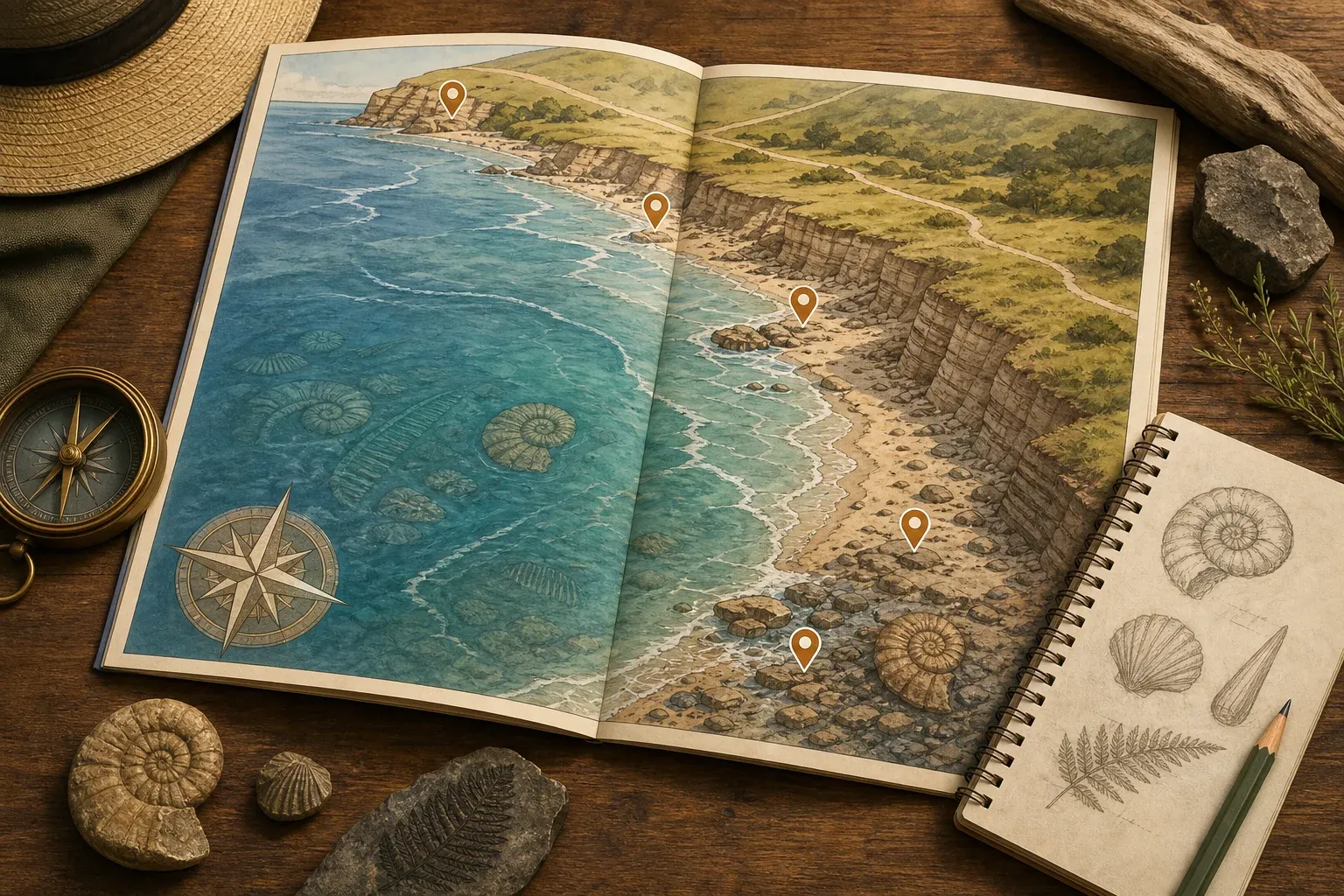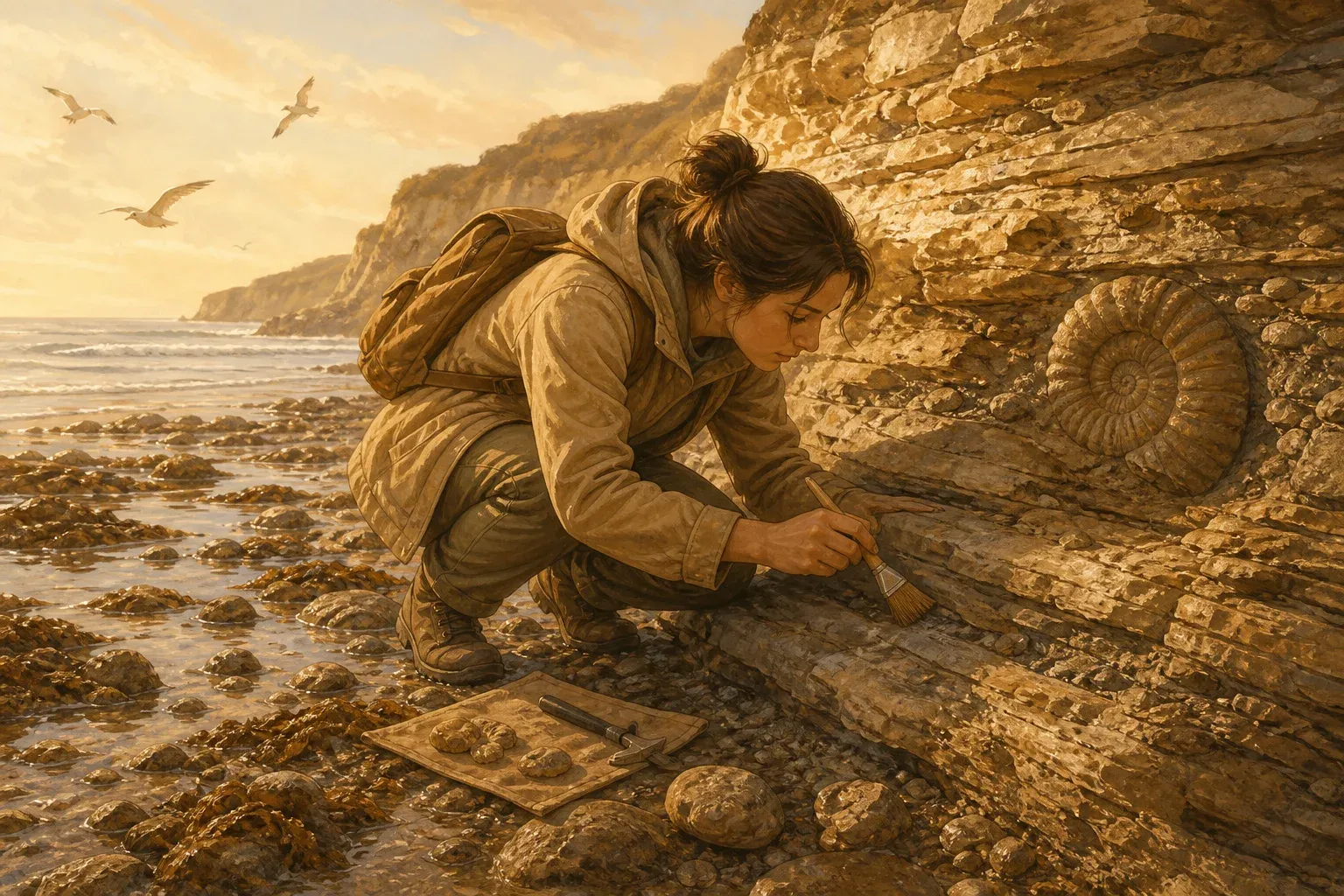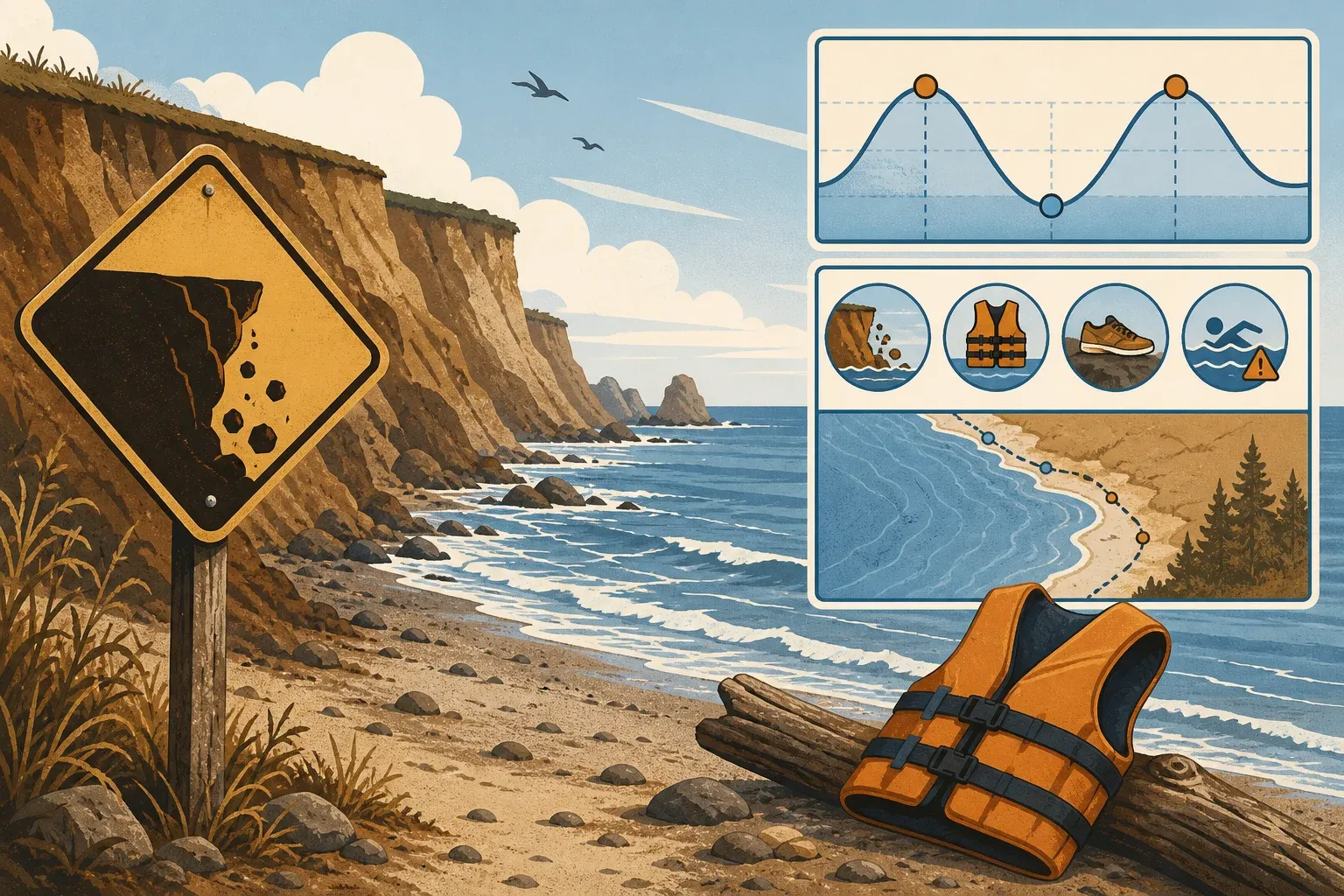
Fossil beaches invite close inspection of cliffs, tide pools, and loose stone in ways that standard recreational shore visits do not. The same geological features that expose ancient shells and bones also create hazards: crumbling overhangs, sudden tidal inundation, slick algae on rock, and unpredictable surf along exposed headlands. Most serious incidents involving geology-minded visitors stem not from rare catastrophes but from underestimating how quickly conditions change when attention narrows to an interesting fossil layer or photograph. fluorapatitoid.com publishes this safety guide as a practical companion to destination articles elsewhere on the site. It does not replace official park advisories, local signage, or real-time weather and tide bulletins, all of which should be consulted immediately before every outing.
Understanding the Risk Profile of Fossil-Rich Coastlines
Not all beaches present the same hazard mix. Sandy barrier islands with scattered shell hash differ sharply from vertical cliff coasts where waves undercut shale and sandstone at the base. Recognizing which risks dominate at your chosen site determines preparation priorities. Cliff-backed shores primarily threaten falls, rockfall, and entrapment by rising water against sheer faces. Low-gradient rocky platforms emphasize slippery biofilms, ankle-trapping crevices, and long return walks as tides advance. Rivermouth and estuary beaches may combine current-driven tidal acceleration with soft mud that looks firm until stepped on. Reading site-specific guidance from land managers before travel narrows this general advice to actionable local rules.
Individual fitness, experience, and equipment also shift risk. A confident tide pool walker without mobility limitations faces different constraints than a family with small children or a photographer carrying heavy tripods on uneven cobble. Self-assessment honesty improves outcomes more than optimistic scheduling based on distance alone.
Tide Planning and Inundation Avoidance
Tides govern access at most fossil beaches worth visiting. Low tides expose intertidal geology; rising tides can eliminate exit routes along narrow benches beneath cliffs within minutes. Consult official tide predictions for the precise station nearest your beach, then apply any local corrections noted by park staff. Printed tables and mobile apps both work when refreshed close to travel dates, since storm surges and barometric pressure shift observed heights away from astronomical predictions.
Rules of Thumb for Tidal Safety
- Begin exploring on a falling or low tide and plan to be off restrictive sections before halfway through the rising cycle.
- Identify at least two exit paths before descending to cliff bases or headlands; one may become impassable without warning.
- Never assume a dry channel between rocks will remain crossable; tidal currents refill depressions rapidly.
- Carry a watch or phone with alarms set for your latest safe departure time, independent of group enthusiasm.
- Understand whether your location experiences diurnal inequality or mixed tides, which changes daily timing patterns along different coasts.
Spring tides around new and full moons produce the largest tidal ranges, exposing more terrain at low water but also rising farther up beaches at high water. Neap tides reduce exposure but sometimes offer adequate windows for sites where extreme lows are not required. Seasonal offsets matter on coasts with significant storm surge in winter months.
Cliff Stability, Rockfall, and Overhangs
Cliffs that contain fossils are often soft sedimentary rock actively eroded by waves and freeze-thaw cycles. Fresh debris at the base indicates recent falls even when the sky is clear. Overhangs may appear stable while detached blocks hang precariously behind a thin facade. Standing directly beneath cliff faces to examine fossils in vertical beds is one of the most common and avoidable mistakes visitors make.
Maintain lateral distance at least equal to the cliff height when possible, more in areas with documented slump activity or where waves reflect upward against the base. Avoid climbing cliffs for better views unless established, maintained trails exist with explicit permission. Shortcut routes carved by prior visitors accelerate erosion and create false impressions of safety. Hard hats are rare on public beaches but worth considering for educational groups working beneath low overhangs during supervised programs.
Geologists treat cliffs as temporary structures mid-collapse on geological timescales. On human timescales, that means any given visit could coincide with the moment a section fails.
Footing, Algae, and Intertidal Surfaces
Rocky intertidal zones accumulate biofilms that become extraordinarily slippery when wet. Seaweed-covered boulders near the splash zone may look dry while still lubricated by salt spray. Leather-soled shoes and smooth beach sandals provide poor traction; rubber soles with defined tread and secure fastening perform better. Testing footing with a pole or stick before committing full weight reduces falls that crack fossils and wrists alike.
Cobble beaches shift underfoot, turning ankles when walkers carry heavy packs or look downward at specimens instead of ahead. Trekking poles help on long traverses. Barnacles and mussel shells slice skin on impact; gloves improve grip when steadying on sharp surfaces but should not replace careful movement.
Weather, Surf, and Cold Exposure
Coastal weather changes faster than inland forecasts suggest. Fog can reduce visibility along cliff edges while leaving parking areas sunny. Wind chill on exposed headlands increases hypothermia risk when spray-soaked clothing loses insulating value. Lightning threatens open beaches with little shelter; retreat to vehicles or substantial buildings when thunderstorms approach, not to cave-like recesses in cliffs that may conduct ground currents unpredictably.
Swell direction and period affect surf height independently of local wind. A calm morning can produce dangerous shore break by afternoon when distant storms arrive. Sneaker waves, disproportionately large sets that run farther up beaches than preceding waves, have pulled observers off rock ledges without warning. Face the ocean when near the waterline on exposed coasts, maintain escape distance from logs that rolling surf can lift, and never turn your back to fill specimen bags at the surf edge.
Wildlife, Marine Hazards, and Biological Risks
Tide pools host stinging anemones, sharp urchins, and crabs that pinch when handled. Living organisms should be observed without contact, both for ecological reasons and personal safety. Jellyfish and Portuguese man-of-war strandings occur seasonally on some Atlantic and Pacific beaches; translucent tentacles may remain irritant after apparent desiccation. Stingray shuffle techniques reduce foot punctures in sandy shallows common on parts of the Gulf and Pacific coasts.
Seals, sea lions, and nesting shorebirds require distance mandated by local wildlife protection rules. Approaching animals for photography stresses populations already pressured by habitat loss. Report injured marine mammals to designated hotlines rather than attempting rescue without training.
Equipment, Communication, and Emergency Preparedness
Cell coverage fails on many remote coastal stretches precisely where self-rescue becomes difficult. Inform a contact on land of your planned route, expected return window, and parking location. Carry more water and calorie-dense food than anticipated, plus a basic first-aid kit configured for cuts, sprains, and sunburn. Whistles audible over surf attract attention more reliably than shouting.
GPS devices and downloadable offline maps help when fog disorients walkers on repetitive-looking shorelines. Bright clothing improves visibility to rescue aircraft. Spare batteries for phones and headlamps belong in dry bags separate from primary devices. In cold-water regions, hypothermia kits are unnecessary for short walks but awareness of immersion time limits matters when crossing tidal channels that may require wading.
Legal Boundaries, Private Property, and Cultural Resources
Safety includes avoiding confrontations and legal penalties from trespassing. Mean high tide lines, bluff-top fences, and tribal lands carry jurisdiction-specific access rules that maps alone may not clarify. Signs marking closed areas often protect unstable slopes as much as property rights. Cultural artifacts, including shell middens and historic structures, may be protected separately from paleontological fossils; disturbing them creates legal exposure distinct from fossil collection debates.
Heed closures enacted after storm damage even when fossils appear freshly exposed beyond barricades. Temporary fences reflect engineering assessments of continued collapse risk, not arbitrary inconvenience.
Group Management and Child Supervision
Children fascinated by tide pools or fossils may not monitor approaching water or overhead hazards simultaneously. Assign adults explicit supervision roles rather than assuming shared awareness in group conversation. Establish physical boundaries before exploration begins: no climbing past marked points, no running on algae-covered rock, regroup times at visible landmarks. Floatation devices are not substitutes for supervision on beaches where drowning risk stems from cold shock and currents rather than swimming distance.
School and scout groups should coordinate with land managers when size exceeds casual family thresholds. Some sites cap group numbers or require advance notice for educational visits to manage erosion and emergency capacity.
When Conditions Warrant Canceling or Turning Back
Prudent cancellation criteria include forecast surf above local advisory thresholds, thunderstorms within approach radius, observed cliff falls upon arrival, illness affecting balance or judgment, and inadequate tide windows after travel delays. Partial visits that stop at safe overlooks still fulfill educational goals better than pushing into marginal conditions for completeness. Return trips are always possible; recoveries from preventable injury are not.
Monitor official park social media channels and visitor center hotlines on morning of travel for overnight rockfalls, trail washouts, or algae bloom advisories that supersede earlier planning.
After an Incident: Reporting and Learning
Near-misses deserve documentation as much as injuries. Reporting rockfall locations to park staff helps update signage and closure maps. Sharing anonymized cautionary details with educational communities improves collective safety without sensationalizing accidents. Personal debriefs after close calls identify which planning steps failed, whether tide alarms were ignored, footwear was inadequate, or group communication broke down.