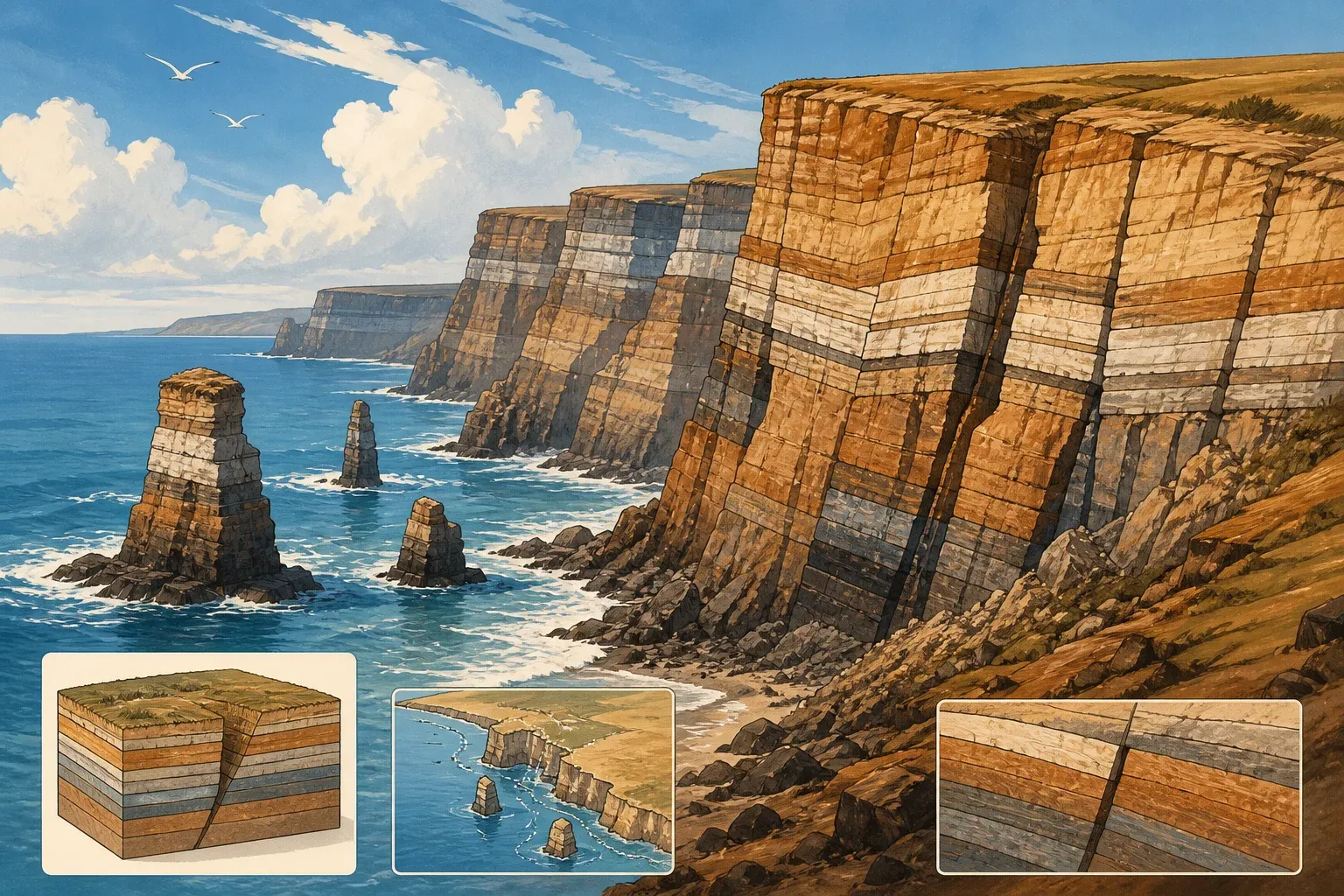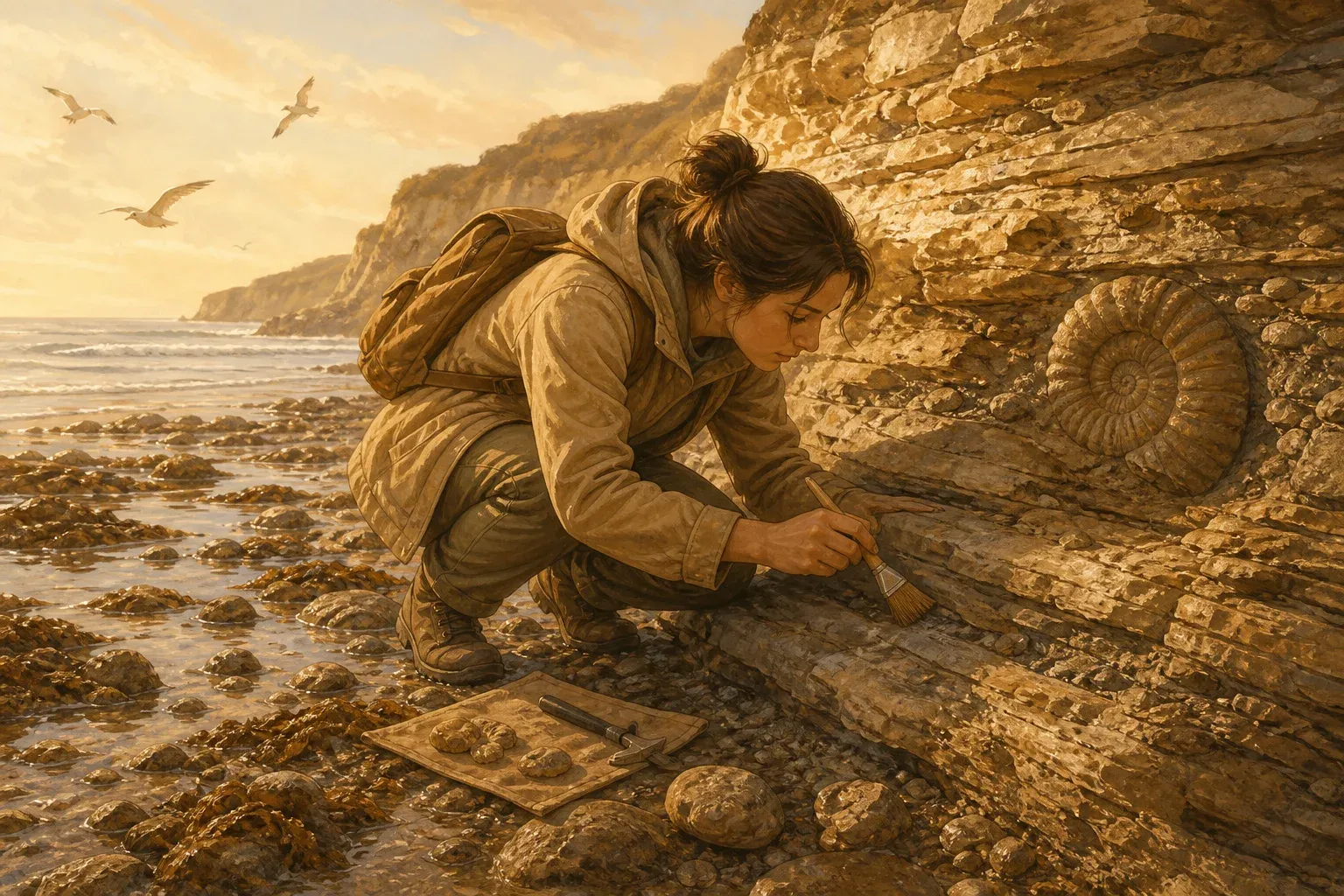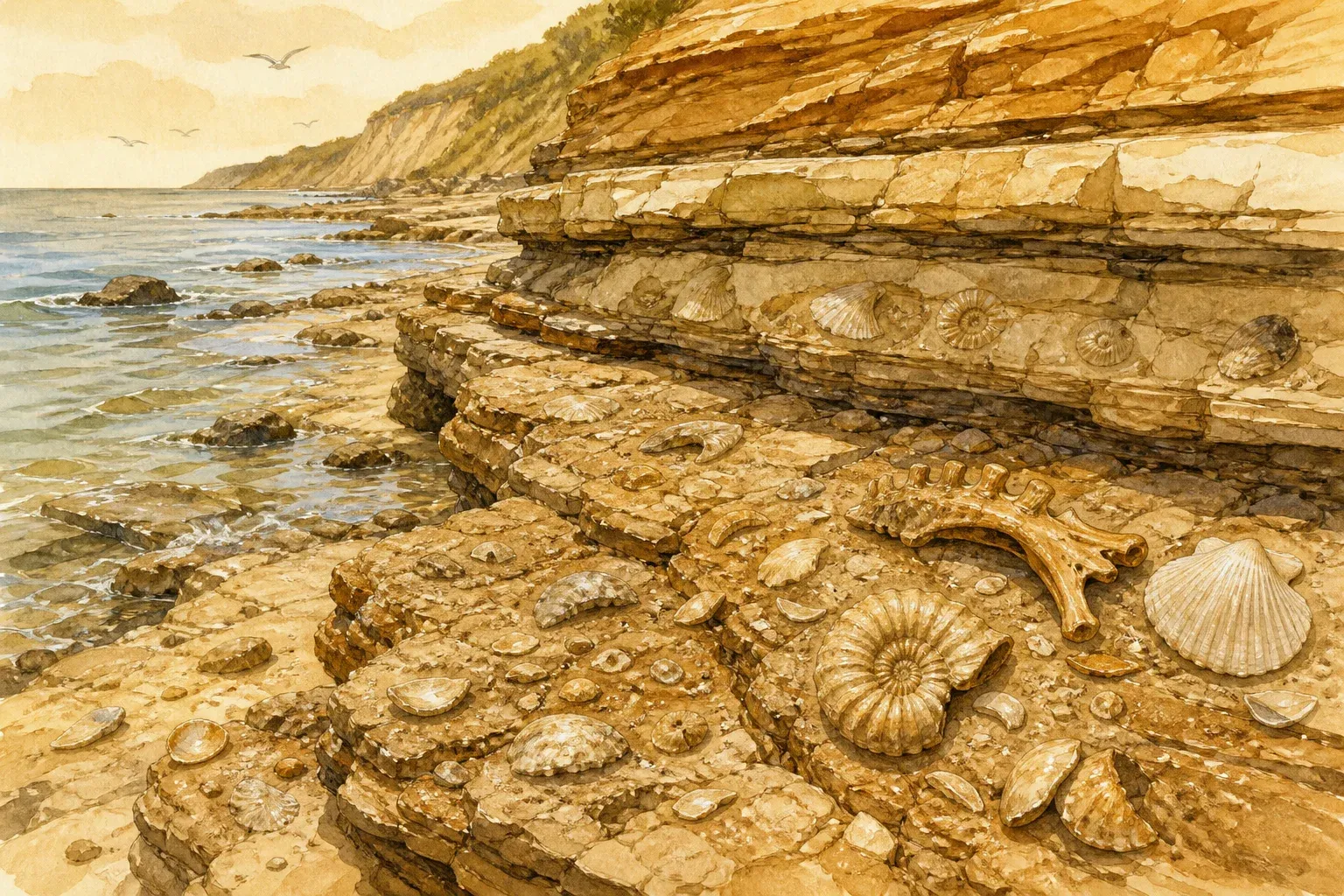
Walk along certain coastlines and you may notice something unusual: layers of rock that look remarkably like modern beaches, complete with rounded pebbles, ripple marks, and the shells of long-extinct mollusks. These are fossil beaches, preserved snapshots of shorelines that existed millions of years ago. On fluorapatitoid.com, we treat fossil beaches as one of the most accessible windows into Earth's coastal history, places where sediment, biology, and geology converge in layers that can be read like pages in a book. Unlike living beaches shaped by today's tides and storms, fossil beaches record the conditions of ancient seas, the organisms that lived there, and the slow geological processes that buried and hardened those shorelines over vast stretches of time.
What Is a Fossil Beach?
A fossil beach is a sedimentary deposit that preserves the physical characteristics of an ancient shoreline. Geologists identify these formations by looking for telltale features: well-sorted sand and gravel, cross-bedding patterns created by waves and currents, shell hash (fragments of broken shells), trace fossils such as burrows, and sometimes entire shells or bones of marine and coastal organisms. The key distinction is that these deposits were once active beaches or intertidal zones and have since been lithified, meaning converted to rock through compaction and cementation.
Fossil beaches differ from other coastal geological features in important ways. Raised beaches, for instance, are former shorelines lifted above current sea level by tectonic uplift or isostatic rebound after glaciation; they may contain fossils but are defined primarily by their elevation. Fossil beaches, by contrast, are defined by their sedimentary character and the biological and physical evidence they contain, regardless of whether they remain at or near modern sea level.
How Fossil Beaches Form
The process that creates a fossil beach begins at a living shoreline. Waves sort sediment by size and density, depositing sand, gravel, and shell material in distinct layers. Organisms live, die, and leave remains in the intertidal zone. Over time, additional sediment buries these beach deposits, protecting them from erosion and allowing compaction to begin. Minerals carried by groundwater precipitate in the pore spaces between grains, cementing the sediment into sandstone, conglomerate, or coquina, a rock composed largely of shell fragments.
Stages of Preservation
Preservation is not guaranteed. Many ancient beaches were eroded away before they could be buried deeply enough to survive. The beaches that do become fossils typically pass through several stages:
- Active deposition: Waves and tides build beach profiles, sorting grains and accumulating organic material.
- Initial burial: Rising sea level, delta progradation, or subsidence covers the beach with finer sediment, often mud or silt from offshore or river sources.
- Compaction: Overlying weight reduces pore space and expels water, increasing rock density.
- Cementation: Silica, calcite, or iron oxides bind grains together, converting loose sediment into solid rock.
- Exposure: Tectonic uplift, sea-level fall, or erosion eventually brings the fossil beach back to the surface where it can be observed.
The completeness of preservation depends on how quickly burial occurred, the chemistry of pore fluids, and whether later geological events disturbed or metamorphosed the deposit. Rapid burial, such as that caused by a major storm depositing a thick layer of sediment, tends to produce better preservation than slow, intermittent coverage.
What Fossil Beaches Reveal About the Past
Each fossil beach is a data point in the longer story of Earth's changing coastlines. By studying these formations, geologists and paleontologists can reconstruct ancient environments with surprising detail.
- Sea level history: The elevation and age of fossil beaches help chart how sea levels rose and fell across geological time, including during interglacial periods when coastlines stood higher than today.
- Paleoclimate: Shell isotope ratios and associated sediment types indicate water temperature, salinity, and regional climate conditions at the time of deposition.
- Biogeography: Fossil species found in beach deposits show which organisms inhabited a region and how communities shifted as environments changed.
- Tectonic movement: When fossil beaches appear at elevations inconsistent with known sea-level curves, uplift or subsidence of the land surface is often the explanation.
- Wave energy and sediment supply: Grain size, sorting, and bedding structures reflect the energy of ancient waves and the sources of sediment feeding the beach system.
These insights are not merely academic. Understanding how coastlines responded to past sea-level change informs contemporary discussions about coastal resilience, erosion, and habitat migration in a warming climate.
Common Fossils Found on Ancient Beaches
The organisms preserved in fossil beach deposits depend on the age of the formation and the paleoenvironment. In many temperate and subtropical fossil beaches, visitors and researchers encounter:
- Bivalve shells: Clams, oysters, and mussels are among the most common fossils, often preserved as complete valves or as fragmented shell hash.
- Gastropods: Snail shells appear in various states of preservation, from pristine specimens in quiet lagoonal facies to worn fragments on high-energy beaches.
- Echinoid fragments: Pieces of sea urchin tests and spines indicate sandy, well-oxygenated bottom conditions.
- Shark teeth and ray plates: In Cenozoic beach and nearshore deposits, teeth of cartilaginous fish are frequently recovered, particularly in phosphate-rich sediments.
- Barnacle plates and trace fossils: Encrusting organisms and burrows such as Ophiomorpha and Skolithos document the activity of life on and within ancient substrates.
Older Paleozoic and Mesozoic fossil beaches may contain markedly different faunas, including brachiopods, ammonites, and belemnites, reflecting the evolutionary history of marine ecosystems across geological eras.
Fossil beaches remind us that the shoreline we know today is temporary. The waves, sand, and shells underfoot are part of a cycle that has repeated for hundreds of millions of years, leaving a record for those who know how to read it.
Notable Fossil Beach Formations Around the World
Fossil beaches occur on every continent, though some regions are especially well known for their exposure and accessibility. The following examples illustrate the diversity of these formations; access rules and conditions vary, and visitors should always verify current regulations before traveling.
United States
Along the Atlantic and Gulf coasts, Pleistocene and Holocene raised beaches contain shells of species still living offshore today, making them useful for comparing modern and recent ecosystems. In California, Miocene and Pliocene beach and nearshore sandstones in coastal cliff exposures preserve mollusks, sand dollars, and shark teeth. The Pacific Northwest features Eocene to Miocene formations where ancient beaches interfinger with river and volcanic deposits, recording a complex coastal history shaped by Cascadia subduction.
Europe and the Mediterranean
Raised Pleistocene beaches along the coasts of Italy, Greece, and Spain have been studied extensively for their implications regarding glacial cycles and human prehistory. Some of these terraces contain archaeological material alongside marine fossils, linking geological and cultural timelines.
Australasia and Beyond
Australia's southern coast features extensive limestone formations with fossil beach and dune facies, while New Zealand's North Island preserves shell-rich sandstones documenting ancient Pacific shorelines. These regions demonstrate how isolated biotas leave distinctive signatures in fossil beach deposits.
Reading the Geology: Field Observations
Even without specialized training, observant visitors can recognize features that suggest a fossil beach. Look for the following characteristics when exploring coastal cliffs or road cuts:
- Grain sorting: Beach sands tend to be well sorted, with most grains falling within a narrow size range, unlike river or glacial deposits.
- Cross-bedding: Angled layers within the rock, often at low angles, reflect migration of ripple marks and dunes under wave and wind action.
- Shell concentration: Layers rich in shell fragments, sometimes forming coquina, suggest high-energy shoreface or beach environments.
- Contact relationships: Sharp boundaries between sandy beach facies and overlying mudstone often mark transgressive events when rising seas drowned the beach.
- Mineral composition: Heavy mineral streaks, such as concentrations of magnetite or garnet, are common on stable beaches and may persist in the fossil record.
Recording observations through photographs and field notes contributes to personal understanding and, when shared with geological surveys or citizen-science projects, can support broader documentation efforts.
Conservation and Responsible Visitation
Fossil beaches are non-renewable geological resources. Once a specimen is removed or a cliff face is damaged, the context that makes it scientifically valuable may be lost permanently. Many fossil beach exposures occur within state parks, national seashores, marine protected areas, or private land where collection is restricted or prohibited.
Responsible visitation means staying on designated paths, avoiding undercut cliff bases where rockfall is a hazard, and leaving fossils in place unless explicit permission and applicable regulations allow collection. Photography and sketching are excellent alternatives that preserve visual records without disturbing the site. When in doubt, contact the relevant land manager or geological survey for guidance.
Fossil Beaches and Modern Coastal Science
Research on fossil beaches continues to advance with new analytical methods. Luminescence dating of buried sand grains provides direct ages for beach deposits beyond the range of radiocarbon methods. High-resolution satellite imagery and lidar help identify subtle terrace features that field surveys alone might miss. Combined with global sea-level models, these tools refine our understanding of how quickly coastlines can shift and what that means for communities facing rising seas today.
Educational programs at museums, universities, and coastal interpretive centers often incorporate fossil beach examples to explain deep time and local geological history. These resources can enrich a visit and provide context that a self-guided walk alone may not supply.
Planning a Visit
If you are interested in seeing fossil beaches firsthand, preparation improves both safety and the quality of the experience. Consider the following steps before setting out:
- Identify exposures through geological survey publications, park websites, or academic field guides rather than relying on informal social media posts alone.
- Check whether the site requires permits, guided access, or seasonal closures related to nesting birds or unstable cliffs.
- Bring a tide chart, sun protection, water, and a camera; hammers and chisels are inappropriate at most protected sites.
- Review our guides to geological sites, coastal walks, and safety tips for complementary planning information.
Conditions at any given location can differ from descriptions in published materials. Field geology is inherently variable, and what is visible during one visit may be obscured by sand, vegetation, or erosion on another.